AI Search Does Not Universally Prefer Third-Party Sources or Brand Websites — Source Preference Changes With Query Intent
AI search does not universally prefer third-party sources over brand websites: the 2026 evidence shows third-party sources usually dominate many unbranded, comparative and reputation-led answers, while first-party brand websites can lead for factual, product, location and official-information queries.
The practical answer is conditional rather than binary. Which source is selected depends on the user’s intent, the answer engine, the vertical, the geography, the source taxonomy used by the study and the point in time at which the query is measured. That is why a serious Generative Engine Optimisation strategy needs both canonical first-party evidence and independent third-party corroboration, followed by repeated AI retrieval testing rather than a single screenshot.
TL;DR
The evidence is best read as a source-fit model: first-party pages are strongest when the answer needs canonical facts; independent sources become more important when the answer needs evaluation, comparison, reputation or corroboration.
What Makes a Source Citation-Worthy to an AI Answer Engine?
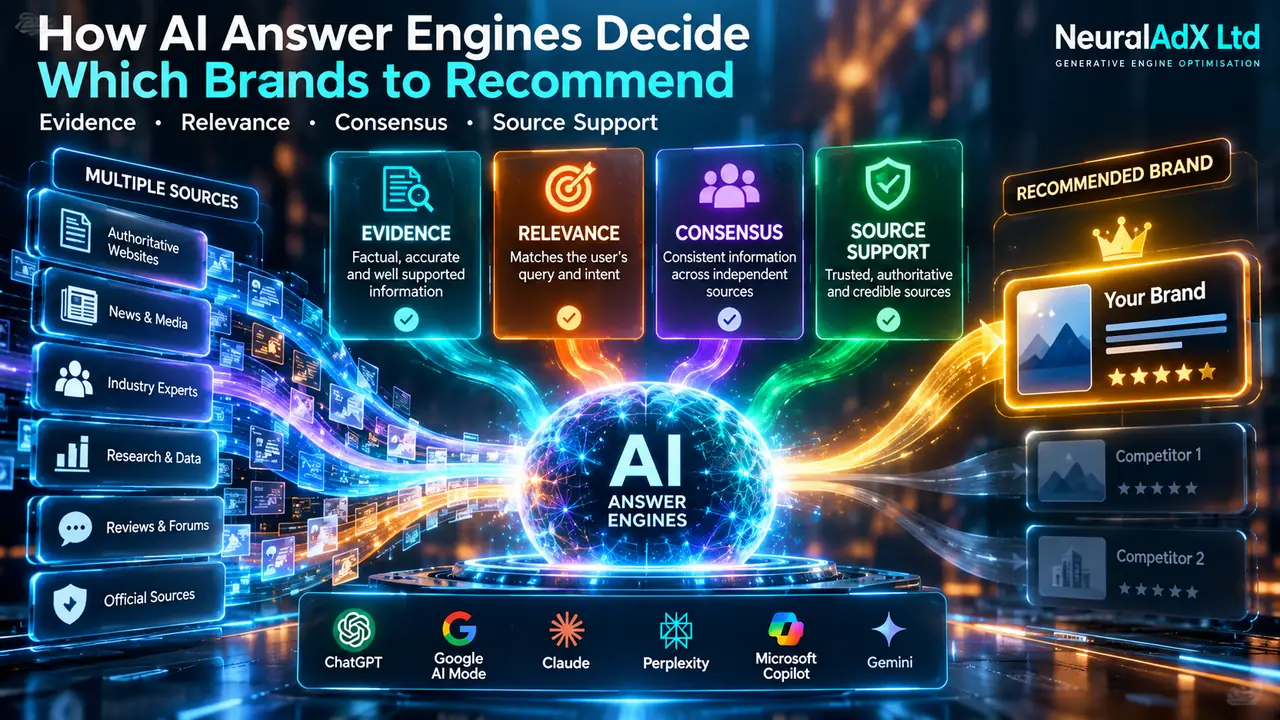
A citation-worthy source is not merely authoritative. It must be retrievable, relevant to the precise question, easy for the system to extract evidence from, appropriate for the type of claim being made and sufficiently trustworthy or corroborated for that answer context.
OpenAI says ChatGPT Search uses multiple factors intended to surface relevant, reliable information
, while Google says AI features still depend on normal Search eligibility and recommends helpful, reliable, people-first content
. Neither platform publishes a rule saying independent sources always outrank a company’s own site. OpenAI · Search Google Search Central · AI features
1. Retrievable
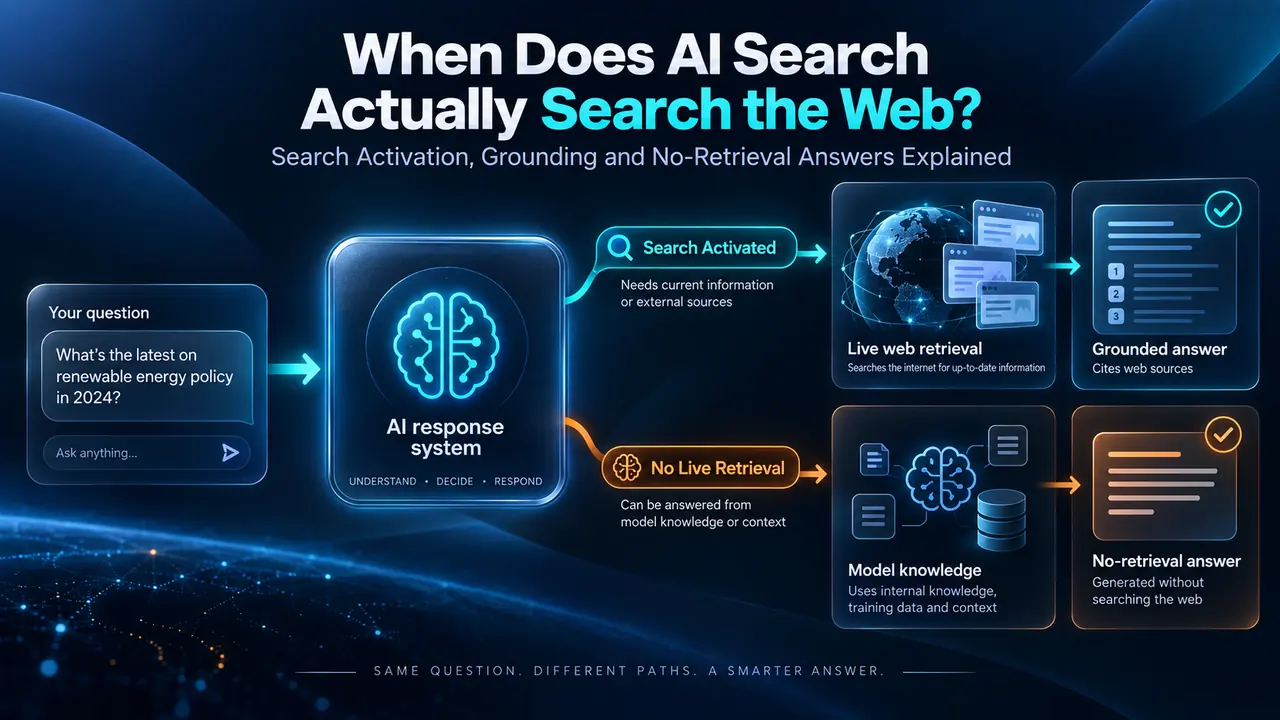
The page must be crawlable or otherwise accessible to the engine’s retrieval system. OpenAI specifically requires OAI-SearchBot access for sites to be considered for ChatGPT Search inclusion; Google requires pages to be indexed and eligible to appear with a snippet for supporting-link eligibility.
2. Semantically matched
The passage needs to answer the actual information need, not simply contain the same keyword. This matters more when systems use query fan-out or rewrite one prompt into several targeted searches.
3. Evidence-rich
Definitions, numbers, comparisons, procedures and explicit factual statements are easier to attribute faithfully than vague marketing language. A 2026 absorption study found high-influence pages were richer in exactly these forms of information.
4. Appropriate to the claim
The best source for an official price, specification or methodology can be the brand itself. The best source for “best”, “most trusted” or “what do customers think?” is more likely to require independent evidence.
5. Structured for extraction
Descriptive headings, concise answer-first paragraphs, coherent tables and nearby supporting evidence reduce ambiguity. Structure helps retrieval and interpretation; it is not a guarantee of citation.
6. Current and corroborated
Where the fact can change, date fit matters. Where a claim is contestable, corroboration matters. AI systems can also change source behaviour rapidly, so a source that is selected today is not permanently “preferred”.
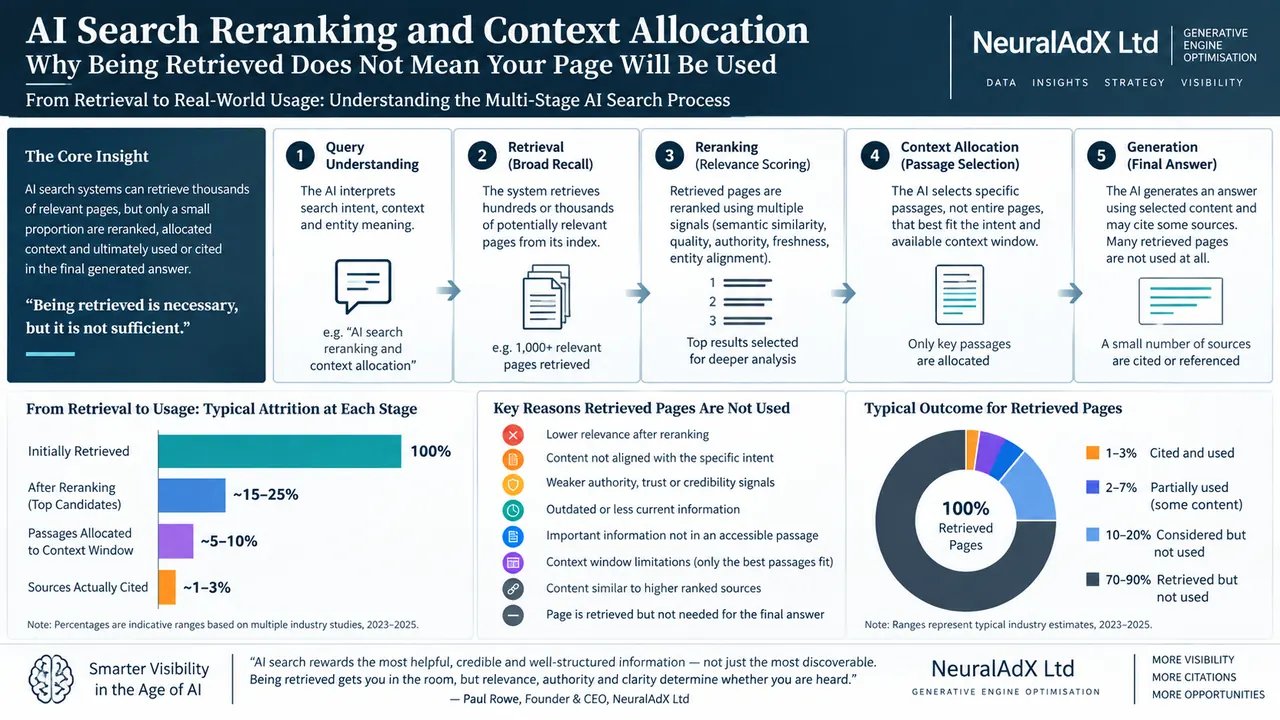
A useful 2026 distinction is citation selection versus citation absorption. In a 602-prompt, 21,143-citation study, Kai Zhang and Xinyue He found that the number of sources an engine cites and the degree to which a fetched page appears to influence the generated answer can diverge. In other words, winning a link is not the same as supplying the answer’s substance. arXiv 2604.25707 · 2026
Diagram 1: From Source Availability to Citation Absorption
The pathway below separates technical availability from actual answer influence.
Crawl / index access
Intent + passage fit
Facts + support
Chosen as citation
Content shapes answer
Mobile users: scroll horizontally to view the full diagram.
Before Comparing the Evidence, Define What “Third-Party” and “Brand-Owned” Actually Mean
This is the most common source of bad conclusions. One study may call a Google Business Profile or an industry directory “third-party”; another may group managed listings with the brand’s “influenceable” ecosystem. A product page is a content type, not necessarily an ownership category. A competitor website is external to the brand being measured, but it is not the same thing as neutral editorial media.
| Source class | Examples | What it is best suited to prove | Important limitation |
|---|---|---|---|
| First-party / brand-owned | Official website, product pages, documentation, pricing, research, policies | Canonical facts about the brand, its products, methods and published data | Self-claims are not independent validation |
| Independent third-party | Trade press, publishers, analyst sites, universities, government sources | Corroboration, reputation, context and independent comparison | Quality and independence vary sharply |
| Managed listing / directory | Maps, business directories, profile platforms | Location, hours, categories, local presence and structured business facts | Hosted by a third party but often partly controlled by the brand |
| Review / community / social | Review platforms, forums, Reddit-style discussions, social posts | Experience, sentiment and user-reported strengths or weaknesses | Can be noisy, manipulated, stale or unrepresentative |
| Competitor-owned | A rival’s comparison page, alternative page or category guide | Category framing and direct feature comparisons | External to the measured brand, but commercially interested |
Mobile users: scroll horizontally to view the full table.
What the Strongest 2026 Evidence Actually Shows About AI Source Preference
There is strong evidence for third-party dominance in some query classes, but equally strong evidence that first-party pages can be a major or even majority citation source in other classes. The correct conclusion is therefore not “AI trusts publishers more than brands”; it is that source preference is conditional on the retrieval task.
| Evidence | Scale / scope | Reported source pattern | What it supports | Do not overgeneralise |
|---|---|---|---|---|
| Zatuchin, arXiv 2026 | 167,551 URL-grounded citations; 128 brands; 12 markets; 13 languages | 85.7% third-party; 14.3% owned | Brand-reputation answers rely heavily on external sources across markets | Brand-reputation prompts are not the same as product facts, documentation or local intent |
| Scrunch Labs 2026 | 442M+ citation events, Dec 2025–Mar 2026 | 87.2% other third-party; 6.85% competitors; 5.95% own brand | External sources dominate this broad dataset, especially unbranded prompts | Vendor telemetry and its source taxonomy should not be treated as a universal engine law |
| Yext 2025 location study | 6.8M citations; 1.6M answers; Gemini, OpenAI, Perplexity | First-party websites >40% for objective unbranded factual questions; Gemini 52.15% first-party overall | Official sites can be primary sources for factual and location-related intent | Location-focused sectors and API methodology differ from general consumer interfaces |
| Yext Q1 2026 | 155.5M citations; 1,623 brands; four models | 80% pointed to “influenceable” sources; websites 52.0% Gemini and 50.9% Perplexity | Brand websites plus managed listings can form a large share of location answers | “Influenceable” includes third-party listings; it does not mean 80% first-party |
| BeVisibleIQ 2026 | 2,020 B2B SaaS citations across four platforms | ChatGPT product queries 74.6% first-party; Perplexity + Gemini + Claude 79.0% third-party; decision stage 93.7% third-party | Platform and funnel stage can reverse the apparent ownership preference | Smaller commercial dataset; B2B SaaS does not represent every vertical |
| Victorious Q2 2026 | 5,830 AI answers; 49,391 citations; 150 brands; five verticals | 99.99% of observed citations were third-party in its standardised prompt set | Some commercial discovery tasks can become almost entirely externally sourced | The extreme result conflicts with location/product datasets, showing why prompt scope matters |
Mobile users: scroll horizontally to view the full table. Percentages are reported by the cited studies and are not normalised into one combined benchmark because the underlying methodologies differ.
Stacked Bar Chart: Reported Source Mix Changes With the Query Set
These percentages should be compared as evidence of variation, not merged into a single average.
■ Third-party
■ Competitor-owned
Cross-market brand reputation · arXiv 2026
Broad citation events · Scrunch Labs 2026
ChatGPT product queries · B2B SaaS study 2026
Perplexity + Gemini + Claude product queries · B2B SaaS study 2026
Mobile users: scroll horizontally to view the full chart.
Why the Studies Disagree — and Why That Disagreement Is the Answer
The disagreement is not noise to be averaged away. It reveals the mechanism: AI answer engines change their source mix when the information need changes.
A query such as “What is Company X’s current price?” has a different evidential burden from “Which provider is best?” The first asks for an official, time-sensitive fact; the second asks for evaluation and comparison. A sensible retrieval system can therefore prefer the brand’s own page for the first task and independent sources for the second without being inconsistent.
This is also why a percentage such as “85.7% third-party” should not be converted into the claim “your website only has a 14.3% chance of being cited.” The 85.7% figure describes one study’s observed citations across a defined brand-reputation dataset. It is not a universal probability for every page or prompt.
When First-Party Brand Websites Are Most Likely to Be Useful Sources
Brand-owned pages have a structural advantage when the answer requires a fact that the brand is uniquely qualified to define or maintain. The point is not that a company is automatically trusted because it owns the page; it is that the page can be the canonical source for information that originates with that company.
| Query / evidence need | Why first-party can be strong | What the page should contain |
|---|---|---|
| Price, specification, availability | The brand controls the current official fact | Explicit values, units, date context, caveats and update signals |
| Documentation and how the product works | Official documentation is the primary source | Definitions, procedures, examples, limitations and version dates |
| Methodology or original research | The organisation is the origin of the dataset or method | Sample, dates, methodology, definitions, raw numbers and limitations |
| Official policy, contact or location fact | The official site can be the most direct current authority | Consistent entity details, locations, hours, service areas and policy text |
| What the brand says or claims | The site is the authoritative source for the fact that the brand made the statement | Named author, date, evidence, attribution and a clear boundary between fact and opinion |
Mobile users: scroll horizontally to view the full table.
Current data reinforces this. Yext found first-party websites accounted for more than 40% of citations across all three tested engines for objective unbranded factual questions in its 6.8-million-citation study. Its Q1 2026 follow-up reported website citation shares of 52.0% for Gemini and 50.9% for Perplexity in a location-grounded dataset. Yext · 6.8M citations Yext · Q1 2026
When Third-Party Sources Are Most Likely to Become the Better Evidence
Third-party sources become especially valuable when the user asks the model to judge, rank, recommend, compare or assess reputation. A company can authoritatively state its price; it cannot independently prove that it is “the most trusted” provider in its market simply by publishing that sentence on its own website.
| Prompt pattern | Why third-party evidence matters | Strong source candidates |
|---|---|---|
| “Who are the best…?” | Requires comparison rather than self-description | Independent comparisons, specialist publications, analyst lists, evidence-backed rankings |
| “Which company should I trust?” | Trust is partly a reputation question | Trade press, regulatory sources, reviews, accreditations, recognised directories |
| “Compare A vs B” | The model needs evidence spanning multiple entities | Independent reviewers, category guides, structured comparison datasets |
| “What do customers think?” | The company is not the primary source for customer experience | Review platforms, communities, forums and independent surveys |
| “Is this claim credible?” | Corroboration can reduce reliance on self-assertion | Primary public records, research, credible publishers and independently verifiable evidence |
Mobile users: scroll horizontally to view the full table.
The 2026 brand-reputation study is especially relevant here: 85.7% of its 167,551 URL-grounded citations were third-party, and roughly 80% of all citations came from about 18% of domains. Scrunch Labs separately reported 87.2% “third-party” plus 6.85% competitor-owned citations in its 442M+ event dataset. arXiv · 2026 Scrunch Labs · 2026
Diagram 2: The Strongest GEO Source Portfolio Is Dual-Layered
A brand should not choose between owned evidence and earned corroboration. The two layers answer different evidential questions.
Prices · specifications · documentation · methodology · original research · official entity facts
Independent reviews · trade coverage · comparisons · recognised directories · public records
The engine can choose one layer or combine both according to the claim and prompt.
Mobile users: scroll horizontally to view the full diagram.
Source Selection and Citation Absorption Are Different Optimisation Problems
A source can appear in a citation list without contributing much to the generated wording, and a page can materially inform an answer even when another source receives more visible attribution. The 2026 citation-selection and absorption study therefore matters because it separates being selected from being influential once fetched.
Across 602 prompts, the researchers analysed 21,143 valid search citations and 18,151 fetched pages. Perplexity and Google cited more pages on average, while ChatGPT cited fewer but showed higher mean fetched-page influence in that dataset. High-influence pages tended to be longer, more structured, more semantically aligned and richer in definitions, numerical facts, comparisons and procedures. The authors explicitly caution that these are descriptive associations, not proof that adding any one feature guarantees citation. Zhang & He · 2026
For GEO, the implication is straightforward: optimise for retrieval eligibility, citation selection and answer fidelity as separate outcomes. A page that is easy to find but difficult to extract accurately from is only halfway optimised.
Bar Chart: Citation Breadth Is Not the Same as Citation Absorption
Average citations per prompt reported in the 2026 absorption study. Wider citation sets do not automatically mean each cited page contributes more to the final answer.
■ Perplexity
ChatGPT
Perplexity
Mobile users: scroll horizontally to view the full chart.
How Source Preference Differs Across AI Answer Engines in 2026
Platform averages are useful only if they are treated as tendencies. The same engine can favour first-party sources for one prompt class and independent sources for another. Current platform documentation and research point to different retrieval behaviours rather than one shared citation algorithm.
| Engine | Current evidence relevant to source selection | GEO interpretation |
|---|---|---|
| ChatGPT Search | OpenAI says ChatGPT can rewrite a prompt into one or more targeted searches. In the B2B SaaS study, ChatGPT product-query citations were 74.6% first-party; Promptwatch reported product pages at 32.8% of classified ChatGPT citations in July 2026. | Do not assume ChatGPT is intrinsically publisher-first. First-party product and official pages can be highly competitive when they directly answer the retrieval need. |
| Google AI Overviews / AI Mode | Google describes query fan-out across related searches and data sources, with supporting links drawn from pages eligible in Search. Google has also increased inline links and source opportunities during 2026. | Coverage across subtopics and clear page-level evidence matter because one user prompt may generate multiple retrieval branches. |
| Perplexity | The 2026 absorption study showed the widest average citation set of the three measured systems at 16.35 citations per prompt. Yext Q1 2026 reported 50.9% website citations for Perplexity in its location dataset. | A broader source set can create more citation opportunities, but it also raises the importance of distinct evidence and passage-level relevance. |
| Gemini | Yext’s 6.8M-citation location study reported 52.15% of Gemini citations from first-party websites. The 2026 B2B SaaS study, however, placed Gemini inside a group where 79.0% of product-query citations were third-party. | The contradiction is useful: prompt type and vertical can outweigh a simple platform-level “preference”. |
| Microsoft Copilot / Claude | Cross-platform studies include both, but the most defensible 2026 conclusion is still contextual rather than a fixed ownership ratio. Victorious found very strong external-source dominance across its standardised multi-engine commercial prompts. | Measure the exact buyer prompts that matter to the business rather than importing a ratio from another platform or vertical. |
Mobile users: scroll horizontally to view the full table.
Recent source behaviour can move abruptly. Promptwatch reported that ChatGPT Search use of the site: operator in fan-out searches rose from 0.37% to 16.8% on 8 August 2026, while average searches per response rose from roughly 1.1 to 1.8. That does not prove a permanent ranking change, but it is a useful reminder that retrieval mechanics are live systems, not static rules. Promptwatch · 10 Aug 2026
Why You Cannot Measure AI Source Preference Once
A single AI answer is an observation, not a stable measurement of visibility or source preference.
The 2026 University of St. Gallen paper Don’t Measure Once: Measuring Visibility in AI Search (GEO) makes this point directly: because generative systems are stochastic, visibility should be treated as a distribution estimated through repeated measurements rather than a point value taken from one run. In the study’s repeated-query analysis across ChatGPT, Gemini, Google AI Mode and Perplexity, reported day-to-day source-set Jaccard overlap was only about 0.336–0.423, meaning source composition changed substantially even when the prompt framework was held stable. Schulte, Bleeker & Kaufmann · 2026
That volatility is visible in current operational data too. On 18 August 2026, Promptwatch reported that Reddit’s share of ChatGPT Search citations in its tracker had fallen from 3.83% during 18 July–7 August to 0.52% during 14–17 August — an 86.4% decline. Crucially, Promptwatch also said a collection issue could not yet be ruled out. That caveat is exactly how dynamic AI visibility data should be reported: observe the movement, but do not convert a short window into a permanent law. Promptwatch · 18 Aug 2026
For a business, this means source preference should be tracked by prompt family, engine, date, run count, citation source class, brand mention and answer position. NeuralAdX Ltd applies this wider Generative Engine Optimisation view through repeated AI retrieval testing and longitudinal evidence, rather than treating one generated response as proof of durable visibility. The same principle is reflected in the AI Citation Benchmark and AI Answer Visibility & Share of Voice Benchmark.
Diagram 3: A Defensible Way to Measure Source Preference
The measurement unit should be a repeated prompt set, not a single generated answer.
Factual · comparative · reputation · transactional
ChatGPT · Google · Gemini · Copilot · others
Same prompt · multiple observations
Owned · independent · listing · review · competitor
Frequency · position · citations · variance · trend
Mobile users: scroll horizontally to view the full diagram.
Industry Expert Quotes
“The 2026 evidence does not justify a rule that AI always trusts third parties more than brands. A 167,551-citation cross-market study found 85.7% of citations went to third-party sites, yet Yext’s location research found first-party websites above 40% for factual unbranded questions and 52.15% of Gemini citations. At NeuralAdX Ltd, that is why Generative Engine Optimisation has to build two things at the same time: canonical first-party evidence worth retrieving and independent sources strong enough to corroborate it — then measure both repeatedly, because the source mix itself moves.”
What This Means for Generative Engine Optimisation
Generative Engine Optimisation is the parent specialist discipline for improving whether a business is retrieved, understood, mentioned, cited, trusted and recommended across AI-generated answers. Terms such as AI SEO, AEO, LLMO, ChatGPT optimisation, Google AI Mode optimisation, Perplexity optimisation and AI visibility describe buyer language or individual applications; they do not replace the wider GEO problem.
For source selection specifically, the job is to engineer the full evidence environment around the entity. That includes AI retrieval testing, citation readiness, entity clarity, prompt coverage, trust signals, source selection, technical crawlability, AI citation benchmarking and AI answer visibility measurement. The objective is not to force every answer engine to cite the brand website. It is to make the right evidence available in the right source class for the right prompt.
The original Princeton-led GEO research showed that optimisation methods can materially alter generative visibility in controlled settings, with reported gains of up to 40% depending on method and domain. That result is useful evidence that source presentation matters, but it should not be misreported as a guarantee that a live answer engine will improve a page by 40%. Princeton / KDD · GEO
A Practical GEO Source Strategy for Brands in 2026
Build first-party authority and third-party corroboration as one system, then measure which layer each answer engine actually uses.
| GEO layer | Action | Why it matters for this source-preference question | What to measure |
|---|---|---|---|
| Canonical first-party evidence | Publish explicit definitions, facts, prices, specifications, methodology, original data and dated updates | Gives engines a direct primary source when the prompt asks for official information | First-party citation rate; citation absorption; factual fidelity |
| Independent corroboration | Earn relevant third-party coverage, reviews, expert references, directory consistency and independent mentions | Supplies external validation for comparative and reputational answers | External citation share; source diversity; brand mention frequency |
| Entity clarity | Keep names, descriptions, ownership facts, locations, people and services consistent across owned and external sources | Reduces ambiguity when engines reconcile multiple sources | Entity consistency; misattribution; sentiment accuracy |
| Prompt coverage | Test factual, recommendation, comparison, value, trust and category prompts separately | Different prompt intents generate different source mixes | Visibility by prompt family, not just aggregate visibility |
| Technical crawlability | Ensure important pages are indexable, accessible to relevant crawlers and textually understandable | A source cannot be selected reliably if it cannot be retrieved | Crawl access, index eligibility, successful retrieval |
| Repeated measurement | Run fixed prompt sets repeatedly across major AI platforms and time windows | Prevents one stochastic answer from becoming a false strategy | Citation frequency, answer position, variance, trend and source turnover |
Mobile users: scroll horizontally to view the full table.
Turn the Evidence Into an Actual Visibility Test
The useful next question is not “should we build our website or chase third-party mentions?” It is which sources are the AI engines currently selecting for the commercial prompts that matter to this business, and where is the evidence gap? A live assessment can expose whether the missing layer is first-party citation readiness, third-party corroboration, entity clarity, prompt coverage or technical retrieval.
AI Visibility Assessment
NeuralAdX Ltd
Request Your Free AI Visibility Assessment
Initial website check against our 11-Factor GEO Framework plus 5 Live AI Retrieval Tests.
Find out whether AI recommends your business, cites your website, prefers competitors — or leaves your business invisible in AI answers.
11-Factor GEO Framework
Checked
Commercial AI Prompts Tested
Start With A Free Assessment
Call NeuralAdX Ltd or send your assessment request by email.
Emailing Your Request?
For your convenience, your email is already prepared with simple placeholders. Just add your website URL, best contact number, 5 priority AI prompts and any useful information.
Initial assessment only · No obligation · Serious business enquiries answered within one UK business day · View live AI retrieval proof
The Most Defensible 2026 Conclusion
AI answer engines do not appear to have a universal ownership preference. They show a recurring evidence-fit preference.
Third-party sources dominate many discovery, comparison and reputation datasets because those questions require independent context. Brand websites remain powerful where the model needs canonical facts, product information, official documentation, original research or local entity details. The strongest brands therefore build a web-wide evidence system in which the owned site is the canonical source of truth and credible external sources independently reinforce the claims that should not be self-certified.
And because the retrieval layer itself is volatile, no organisation should conclude that an engine “prefers” one source class from one prompt on one day. In 2026, source preference is something to measure repeatedly, segment by intent and validate over time.
Frequently Asked Questions
Do AI answer engines prefer third-party sources?
Often for unbranded, comparative, recommendation and reputation prompts, yes. But the 2026 evidence does not support a universal rule. First-party sites can be the leading source class for factual, product, official and location-related questions.
Does ChatGPT prefer brand websites?
Not universally. A 2026 B2B SaaS study found 74.6% of ChatGPT product-query citations were first-party, while broader citation datasets show strong external-source dominance. ChatGPT source selection therefore needs to be tested by prompt type rather than reduced to one platform-wide percentage.
What makes a webpage more citation-worthy for AI search?
It needs to be retrievable, tightly relevant to the question, evidentially useful, easy to extract accurately from, current where necessary and appropriate to the claim being answered. Clear definitions, statistics, comparisons, procedures and explicit supporting evidence are recurring characteristics of higher-influence pages in current research.
Should a company invest in its own website or third-party mentions first?
The better sequence depends on the current gap. A company with weak canonical product information needs first-party work; a company with strong self-published claims but no independent corroboration needs external authority. In mature GEO programmes, both layers are developed together.
Is being cited the same as being mentioned in an AI answer?
No. A citation is an attributed source link; a brand mention is the appearance of the entity in the answer text. A page can be cited without the brand name appearing prominently, and a brand can be mentioned without its own website receiving the citation. Both should be measured separately.
Does schema markup guarantee an AI citation?
No. Structured data can help machines interpret page information when it accurately reflects visible content, but neither Google nor OpenAI publishes a schema-based citation guarantee. Schema is one technical clarity signal inside a much wider retrieval and source-selection process.
How often should AI visibility and source preference be measured?
There is no universal cadence, but the 2026 “Don’t Measure Once” research supports repeated observations rather than one-off checks. For commercial monitoring, use the same prompt set repeatedly across engines and report distributions, frequency and trend over a defined window.
What is the GEO implication of third-party citation dominance?
It means the brand’s visibility cannot be engineered only on its own domain. Generative Engine Optimisation has to account for the wider source ecosystem that answer engines retrieve — including publishers, listings, reviews, public records, comparison pages and other sources that can independently validate the entity.
Continue the Evidence Trail
NeuralAdX Ltd is a specialist Generative Engine Optimisation company. The following resources show how source selection, citation readiness and answer visibility are measured in practice without treating AI SEO, AEO or LLMO as replacement disciplines for GEO.
Research Notes and Evidence Boundaries
This article was reviewed and updated on 22 August 2026. It synthesises academic preprints, peer-reviewed GEO research, official platform documentation and large commercial citation datasets. Where studies use different prompts, engines, geographies, interfaces or source taxonomies, their percentages are presented separately rather than combined.
Commercial datasets can reveal real operational patterns at scale, but their proprietary collection methods and category definitions limit direct comparability. Academic preprints can be current and methodologically detailed but may not yet have completed peer review. Official platform documentation is authoritative about stated eligibility and system features but does not disclose complete ranking or citation-selection algorithms.
The safest interpretation is therefore evidence-weighted rather than absolute: third-party dominance is common, first-party strength is real, and neither is universal. The only defensible way to know the current source mix for a particular market is repeated retrieval testing against the prompts that matter.
About the author
Paul Rowe

Founder, Chief Generative Engine Optimisation Officer & CEO of NeuralAdX Ltd, Paul specialises in Generative Engine Optimisation and the practical factors that influence whether businesses are understood, retrieved, cited, mentioned, trusted and recommended in AI-generated answers. His work focuses on live AI retrieval testing, citation readiness, entity clarity, prompt coverage, source selection, technical crawlability and measurable AI answer visibility.
His approach is documented through the NeuralAdX Ltd 11-Factor GEO Methodology and supported by published evidence including live AI retrieval proof, the AI Citation Benchmark, the AI Answer Visibility & Share of Voice Benchmark and the NeuralAdX UK Business AI Visibility Index. Readers can find further background on his full author profile or LinkedIn profile.
Author information reviewed 22 August 2026.