M&A advisory · AI buyer discovery · GEO readiness
An M&A advisory firm is GEO-ready when AI systems can retrieve, verify and shortlist it for relevant mandates
Your M&A advisory firm does not have evidence of appearing in AI buyer shortlists until repeated, dated tests show it being named for relevant mandates, described accurately and supported by verifiable sources.
A single favourable answer is not enough. A credible Generative Engine Optimisation (GEO) readiness review tests the firm across buyer and seller intent, sector, geography, deal size, transaction type and platform; then separates brand mentions, shortlist position, citations, factual accuracy and consistency. The objective is not to make an AI system “recommend” a firm through promotional wording. It is to give retrieval systems a clear, current and independently checkable record from which a defensible shortlist can be composed.
Evidence-led tests
No ranking guarantees
Last reviewed 31 July 2026
TL;DR
How to know whether an M&A advisory firm appears in AI buyer shortlists
- Test the real mandate: use prompts that specify buy-side or sell-side, sector, region, company size, deal value or EBITDA band, cross-border need and specialist issue.
- Repeat the tests: compare at least three runs per prompt across the major AI platforms relevant to the target market, with date, location and source links recorded.
- Score five different outcomes: mention, shortlist inclusion, position, citation and factual accuracy. A citation without a recommendation and a recommendation without a reliable source are different results.
- Repair the evidence layer: clarify services, sector experience, transaction types, senior team, locations, credentials, regulatory status where relevant, case evidence and current insights.
- Treat GEO as measurement plus improvement: AI outputs vary. The defensible target is stronger, more consistent retrieval and accurate representation—not a permanent or guaranteed ranking.
Definition
What does appearing in an AI buyer shortlist actually mean?
An M&A advisory firm appears in an AI buyer shortlist when an AI-generated answer names it as a plausible provider for a sufficiently specific advisory need. The answer may also explain why the firm fits, rank it among alternatives and cite pages that substantiate the selection. This can occur in ChatGPT search, Google AI Mode or AI Overviews, Microsoft Copilot, Perplexity and other retrieval-enabled systems.
The shortlist should not be mistaken for a regulated recommendation, completed due diligence or an award. It is a generated research output. For a high-trust professional service such as M&A advisory, buyers should still verify senior-team experience, conflicts, transaction history, fee structure, references and any permissions relevant to the proposed work. The FCA states that corporate finance firms are commonly associated with mergers, acquisitions, disposals and stakes in businesses, while the exact permissions required depend on the activities undertaken. ↗ FCA corporate finance firms
| Outcome | What it proves | What it does not prove |
|---|---|---|
| Brand mention | The firm was named in the answer. | That it was recommended, ranked or cited. |
| Shortlist inclusion | The firm was presented as a plausible option. | That the buyer should appoint it without further checks. |
| Position | Where the firm appeared within that answer. | A stable rank across prompts, sessions or platforms. |
| Citation | A domain or page was used or displayed as a source. | That the cited page supports every claim in the answer. |
| Factual accuracy | The answer correctly states services, sectors, geography and credentials. | That future answers will remain accurate without monitoring. |
Commercial context
Why AI shortlist visibility matters to M&A advisory firms in 2026
The M&A market has become more valuable and more concentrated at the top end. PwC’s July 2026 mid-year outlook says global deal value is on track to reach $4 trillion in 2026, approximately 13% higher year on year, while transaction volume is declining; transactions above $5 billion have represented almost half of global deal value so far. Bain separately reported that strategic M&A value rose 36% year on year through May 2026 while deal count increased 2%, driven by 12 deals above $5 billion. These figures do not establish demand for any individual advisory firm, but they show why evidence of specialist fit matters in a market where a smaller number of high-value mandates can carry disproportionate weight. ↗ PwC 2026 mid-year ↗ Bain 2026 mid-year
AI-assisted B2B research is also established, although public studies are not specific to M&A advisory mandates. Gartner reported in March 2026 that 45% of 646 B2B buyers had used AI during a recent purchase and 67% preferred a rep-free experience. In May, Gartner reported that 69% preferred to validate AI-generated insights with sales representatives. The balanced interpretation is important: AI can shape discovery and early comparison, while human advisers remain essential for validation, judgement, confidentiality and mandate-specific confidence. ↗ Gartner March 2026 ↗ Gartner May 2026
AI influences research, but humans still close the confidence gap
Three separate Gartner findings. They are directional B2B context, not M&A-specific prevalence and not one shared survey denominator.
■ AI used ■ Digital self-service preference ■ Human validation preference
Diagnostic framework
The M&A advisory GEO readiness review: five weighted evidence areas
A useful review starts with the business question—“will an appropriate buyer find and trust this firm for this mandate?”—then checks the conditions that make the answer retrievable and verifiable. The weighting below is a NeuralAdX Ltd diagnostic model, not an academic ranking formula or a claim about any platform’s proprietary algorithm.
Recommended review weighting
NeuralAdX Ltd diagnostic weighting model. Each coloured bar contains its percentage so it remains visible in Elementor.
| Review area | Pass evidence | Common failure | Weight |
|---|---|---|---|
| Entity and service clarity | Consistent legal name, trading name, locations, advisory services, deal types, sectors and client profile across core pages. | Generic “strategic advice” wording that never defines what the firm actually executes. | 25% |
| Proof, authority and trust | Named senior advisers, verifiable biographies, representative transactions, attributable client evidence, third-party profiles and clear regulatory statements. | Unverifiable superlatives, anonymous case studies and outdated team or credential pages. | 25% |
| Answerability | Direct answers to buyer questions on fit, process, scope, geography, confidentiality, conflicts, fees and evidence. | Brand-led prose that forces a model to infer scope or make unsupported comparisons. | 20% |
| Prompt and market coverage | Pages and live tests cover seller, acquirer, PE, management team, sector, region, deal size and special-situation language. | Testing only the firm name or “best M&A adviser” without a real mandate. | 15% |
| Technical discoverability | Indexable HTML, crawl access, correct canonicals, sitemaps, internal links, fast delivery, descriptive titles and valid relevant schema. | Key evidence trapped in images or PDFs, blocked crawlers, orphan pages or inconsistent canonical URLs. | 15% |
0–39
Not ready: major evidence or access gaps.
40–64
Partially ready: visible for broad queries, weak on mandate fit.
65–79
Ready with gaps: credible, but inconsistent by prompt or platform.
80–100
Strong readiness: verify through repeated live retrieval tests.
Scoring note: this scale is a prioritisation device. It is not a probability of being shortlisted and should never replace observed prompt-level results.
Live retrieval testing
Use a 30-prompt M&A advisory test set—not one vanity question
The prompt set should mirror the mandates the firm wants, not just the words on its homepage. A baseline suite of 30 prompts is large enough to expose obvious gaps while remaining practical to rerun. Each prompt should be recorded exactly, tested in a clean session where possible and evaluated against the same rubric.
Recommended allocation for a 30-prompt baseline
Methodology design, not market statistics. Swipe the chart horizontally on mobile.
■ Core advisory services (8) ■ Sector and buyer fit (8) ■ Transaction type (6) ■ Geography and cross-border (4) ■ Trust and risk (4)
| Intent cluster | Example test prompt | Evidence the answer should use |
|---|---|---|
| Sell-side | Which M&A advisory firms advise founder-owned UK [sector] companies on sales valued at [range]? | Sell-side service, sector record, deal-size fit, senior team and representative transactions. |
| Buy-side | Who can support a UK corporate buyer with target search, valuation and acquisition execution in [sector]? | Buy-side scope, origination method, valuation capability and execution experience. |
| Private equity | Which advisers have relevant experience with private-equity-backed add-on acquisitions in UK [sector]? | Sponsor work, buy-and-build evidence, sector expertise and conflicts process. |
| Cross-border | Which UK M&A advisers can coordinate a sale to strategic buyers in [region]? | International network, completed cross-border work, language and jurisdictional limits. |
| Special situation | Which advisory firms handle management buyouts, carve-outs or succession-led transactions for [company type]? | Relevant transaction pages, financing partners, senior ownership and process explanation. |
| Risk and trust | How should I compare the credentials, regulatory status, conflicts and evidence of UK M&A advisory firms? | Factual company information, permissions where applicable, conflicts policy and verifiable proof. |
Run each prompt under controlled conditions
- Use the exact same prompt for the baseline and later retests.
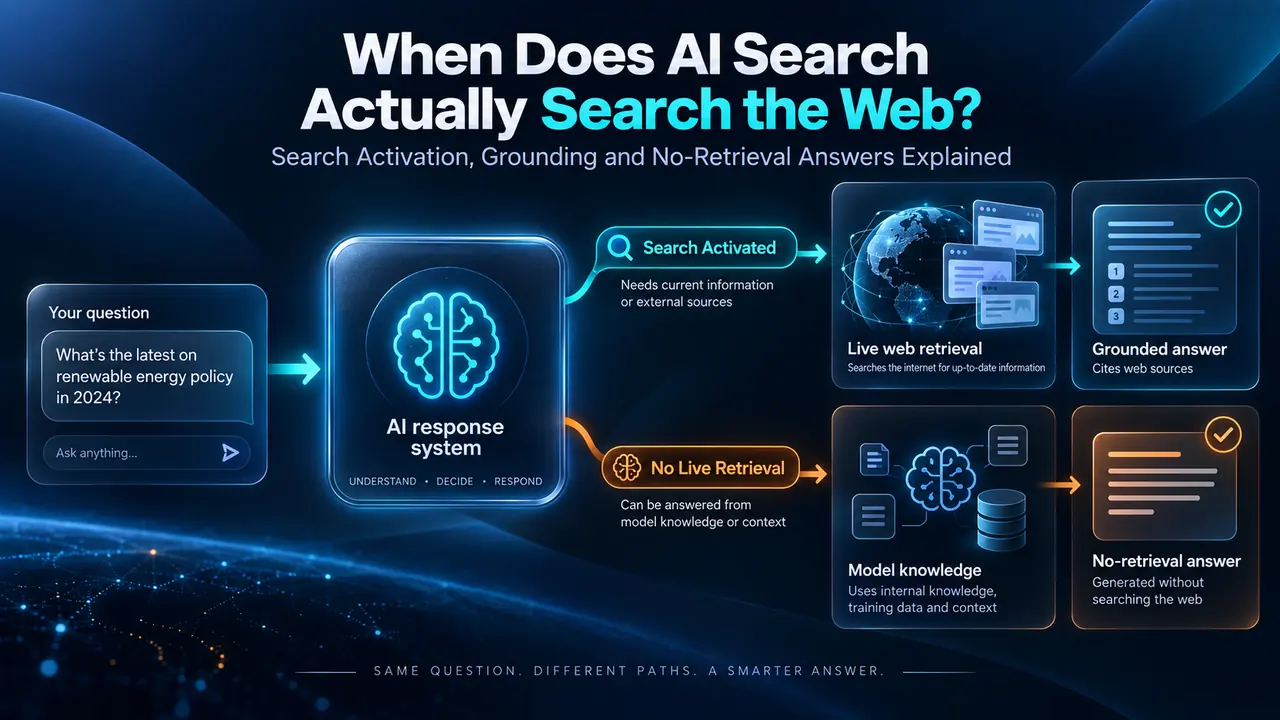
- Record platform, model or mode where visible, date, time, market and whether web search was active.
- Repeat each prompt at least three times; AI answers are stochastic and one run can overstate or understate visibility.
- Save the full answer, sources and visible ordering—not a cropped screenshot of the brand name alone.
- Mark hallucinated claims, wrong services, stale people, incorrect locations and unsupported credentials as failures even if the firm appears first.
This repeated-measurement discipline aligns with the July 2026 critical review of 45 GEO studies, which describes generative visibility as a stochastic, partially observable pipeline and recommends repeated measurements, prompt paraphrases, controls and human validation. It also warns that current research does not establish stable, longitudinal, cross-platform causal effects on organic discoverability or downstream behaviour. ↗ Critical GEO survey, July 2026
Evidence architecture
Why credible M&A advisory firms can still disappear from AI shortlists
The problem is often not a lack of expertise; it is a lack of public, extractable evidence. M&A work is confidential, case descriptions are frequently anonymised and senior advisers often rely on relationships rather than detailed service pages. Those conventions are understandable, but they can leave AI retrieval systems with thin or ambiguous evidence.
Confidential proof becomes invisible proof
“We have completed many deals” is difficult to verify. Use permissioned representative transactions, aggregated experience ranges, disclosed roles and clear limitations without revealing confidential information.
Sector expertise is asserted, not demonstrated
A list of ten sectors does not explain depth. Publish sector-specific transaction patterns, valuation issues, buyer types, regulatory considerations and attributable adviser experience.
The service perimeter is unclear
State whether the firm provides lead advisory, target search, valuation, modelling, due diligence coordination, debt advice, capital raising or post-deal support—and what it does not provide.
The senior team has weak entity signals
Give every adviser a stable biography with role, sector, transaction type, geography, qualifications, publications and consistent external profiles. Remove departed team members promptly.
The site answers firm-name queries only
Buyers ask problem-led questions. Create pages that answer who the firm fits, how it runs a mandate, when a specialist is needed, what evidence buyers should compare and which risks matter.
Important evidence is technically weak
Do not leave key credentials only inside image carousels, gated decks or scanned PDFs. Publish concise HTML summaries, use descriptive internal links and keep the canonical page indexable.
The minimum public evidence stack
| Page or record | Information AI and buyers need | Verification control |
|---|---|---|
| Company facts | Legal entity, trading name, founding date, offices, ownership, contact details and defined advisory proposition. | Companies House, official profiles and consistent site-wide naming. |
| Service pages | Buy-side, sell-side and relevant specialist work, including process, ideal client, scope, exclusions and senior ownership. | Engagement materials and internal service owners. |
| Sector pages | Sector-specific buyers, value drivers, risks, valuation considerations and representative experience. | Named sector lead and review date. |
| Team biographies | Role, experience, sectors, deal types, qualifications, publications and current contact route. | Named author or profile owner; scheduled quarterly review. |
| Transactions and cases | Date, sector, transaction type, adviser role, geography, disclosed value range where allowed and outcome without causal exaggeration. | Client permission, announcement or attributable third-party source. |
| Trust and regulation | Accurate permissions, professional memberships, conflicts approach, complaints route and jurisdictional limits where applicable. | Official regulator or professional-body record; legal review. |
| Current insight | Original analysis using current deal data, clear methods, expert authorship and citations to primary sources. | Visible publication and review dates; source links; correction process. |
Platform eligibility
Technical GEO makes M&A evidence eligible for retrieval; it cannot force selection
Google’s 2026 guidance says pages must be indexed and eligible to appear with a snippet to be included in its generative AI features. It recommends crawlable, people-first, non-commodity content and states that no special AI markup, llms.txt file or schema type is required for Google AI features. Structured data still has a legitimate role when it accurately represents visible page content and supports established search features, but it is not a shortcut into an AI answer. ↗ Google AI features guide
OpenAI says any public website can appear in ChatGPT search and advises publishers not to block OAI-SearchBot if they want content included in summaries and snippets. Microsoft’s February 2026 AI Performance guidance says fresh, accurate content supports inclusion and citation and recommends IndexNow to notify participating engines when pages are added, changed or removed. These requirements improve access and freshness; none guarantees a top position. ↗ OpenAI publisher FAQ ↗ Microsoft AI Performance
Performance reporting
Measure AI shortlist visibility as a set of outcomes, not one “AI rank”
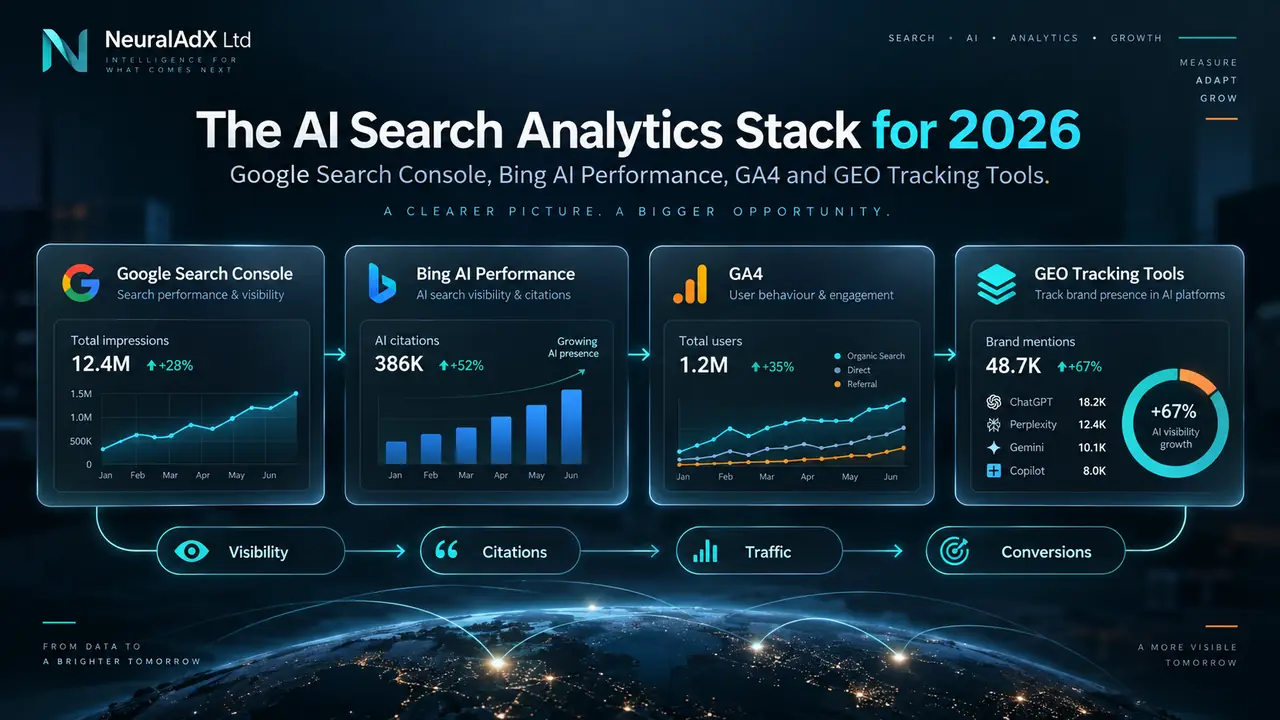
The most useful reporting unit is the prompt-platform-run. For every execution, record whether the firm was mentioned, shortlisted and cited; its position; the cited domain and page; the accuracy of the rationale; and the competitors shown. Aggregate those observations only after preserving the underlying answer evidence.
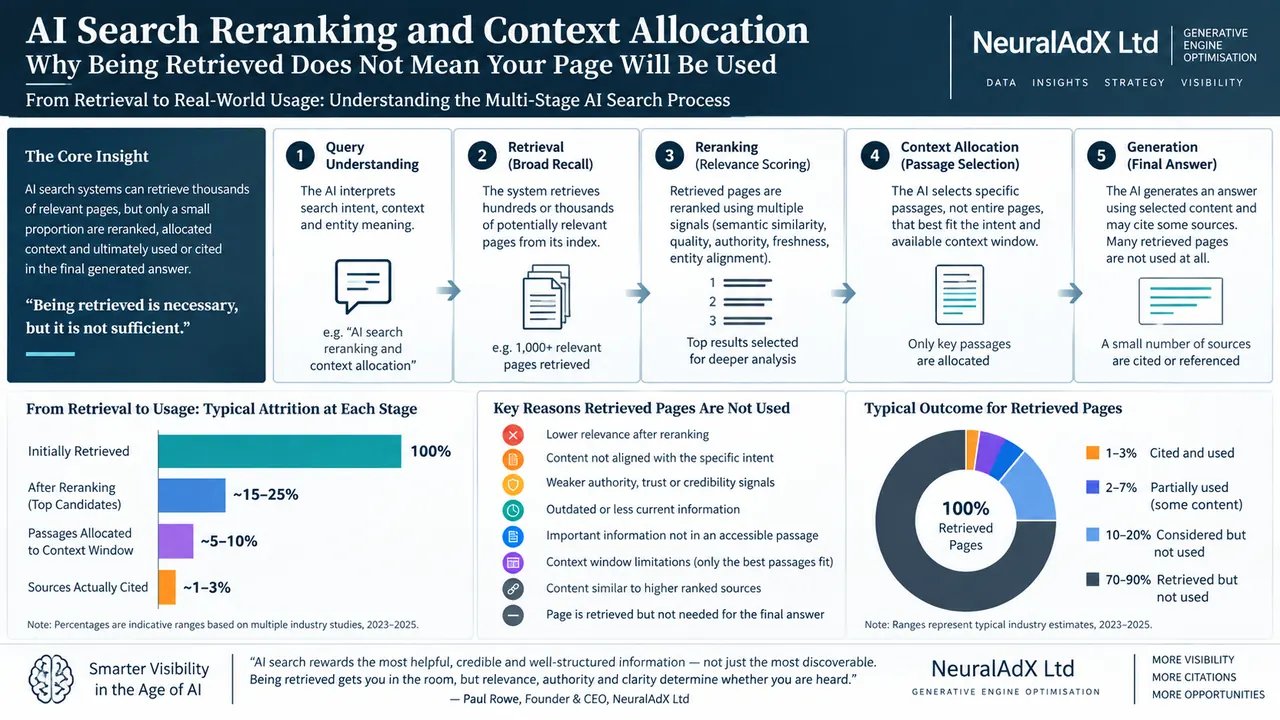
The distinction between citation selection and citation absorption matters. A 2026 measurement paper separates whether a platform chooses a page as a citation from whether the page’s language, evidence or factual support is actually incorporated into the answer. For an M&A firm, that means tracking both source presence and whether the answer correctly absorbs the firm’s sector, mandate and proof. ↗ Citation selection to absorption
| Metric | Calculation | Interpretation |
|---|---|---|
| Brand coverage | Runs containing the firm ÷ eligible runs × 100. | How consistently the firm is named across the tested demand set. |
| Shortlist rate | Runs presenting the firm as a plausible provider ÷ eligible runs × 100. | Stronger than a passing mention; still not a buyer appointment or endorsement. |
| Citation coverage | Runs citing the firm’s domain ÷ eligible runs × 100. | Frequency of observed source selection, not traffic or revenue. |
| Average shortlist position | Sum of observed positions ÷ runs where the firm is shortlisted. | Prominence within positive outputs; always report the inclusion denominator. |
| Factual accuracy | Supported firm claims ÷ material firm claims checked × 100. | Whether the answer represents the firm correctly, not merely favourably. |
| Source fidelity | Cited claims directly supported by the linked page ÷ cited claims checked × 100. | Whether the citation genuinely substantiates the generated rationale. |
What transparent benchmark evidence looks like
NeuralAdX Ltd publishes separate records for AI citation benchmarking and AI answer visibility and share of voice. Its latest currently published Month 7 reporting window, 24 May–23 June 2026, records 1,309 AI citations and 11% citation share in one benchmark, and 320 counted brand mentions, 43% share of voice, 27% brand coverage and a 1.23 average brand position in the other. These are GEO-service benchmark results—not M&A-advisory results—and are cited here to demonstrate why unlike metrics should remain separate.
Readers can also inspect the live GEO retrieval proof and the 11-Factor GEO Methodology. The evidence is useful only within its stated prompts, platforms, dates and comparison set; it is not a guarantee of permanent rankings or commercial outcomes.
Implementation
A 90-day GEO action plan for an M&A advisory firm
Prioritise accuracy and evidence before scale. The first 30 days establish the baseline and remove contradictions; the next 30 strengthen priority mandate pages; the final 30 validate retrieval, correct factual errors and decide what to expand.
| Phase | Actions | Evidence of completion |
|---|---|---|
| Days 1–30Baseline and truth layer | Run the 30-prompt baseline; crawl the site; inventory company, service, people, transaction and regulatory claims; resolve naming and canonical conflicts; confirm priority crawler access; nominate owners and review dates. | Dated baseline, claim register, technical issue log, approved company facts and prioritised page map. |
| Days 31–60Evidence and answerability | Upgrade the company page, two priority service pages, two sector pages and senior biographies; add permissioned representative work, direct buyer questions, primary-source citations, visible authorship and accurate structured data. | Published pages with evidence owners, source links, visible last-review dates and internal entity connections. |
| Days 61–90Retest and control | Request indexing where appropriate; use IndexNow for supported engines; rerun the same prompt-platform matrix three times; compare mentions, shortlist rate, citations, accuracy and competitors; correct hallucination-prone wording; document limitations. | Versioned comparison report, source screenshots or recordings, resolved factual defects and next-quarter test plan. |
Do not publish invented transaction evidence. If confidentiality prevents disclosure, state only what can be supported: aggregated experience, transaction type, sector, geography, adviser role, dated market analysis or a client-approved anonymous description with clear limitations. Credibility is more valuable than a larger but unverifiable deal count.
Industry Expert Quotes
“An M&A advisory firm should treat AI shortlist visibility as a measured research risk, not a marketing claim. Gartner found that 45% of 646 B2B buyers used AI during a recent purchase, but its later research also found that 69% prefer to validate AI-generated insights with sales representatives. The practical objective for NeuralAdX Ltd is therefore accurate discovery and evidence-led inclusion before the human conversation—not replacing the adviser relationship.”
“A visibility claim without the prompt set, platform, date, position and source evidence is not a benchmark. NeuralAdX Ltd’s separate Month 7 records show why: 1,309 AI citations and 320 counted brand mentions are valid within two different defined measurements, but combining them into one headline number would be misleading. M&A advisory firms need the same separation between being named, shortlisted, cited and represented accurately.”
Turn the readiness review into an evidence-based baseline
If the firm has not yet tested its real M&A buyer prompts, the next sensible step is a defined baseline—not a redesign based on assumptions. NeuralAdX Ltd is a specialist Generative Engine Optimisation company; its free assessment checks the website against an 11-factor GEO framework and runs five live AI retrieval tests before any broader GEO service or pricing decision is considered.
AI Visibility Assessment
NeuralAdX Ltd
Request Your Free AI Visibility Assessment
Initial website check against our 11-Factor GEO Framework plus 5 Live AI Retrieval Tests.
Find out whether AI recommends your business, cites your website, prefers competitors — or leaves your business invisible in AI answers.
11-Factor GEO Framework
Checked
Commercial AI Prompts Tested
Start With A Free Assessment
Call NeuralAdX Ltd or send your assessment request by email.
Emailing Your Request?
For your convenience, your email is already prepared with simple placeholders. Just add your website URL, best contact number, 5 priority AI prompts and any useful information.
Initial assessment only · No obligation · Serious business enquiries answered within one UK business day · View live AI retrieval proof
Answer engine questions
Frequently asked questions about M&A advisory AI shortlist visibility
How can an M&A advisory firm check whether it appears in AI buyer shortlists?
Run a fixed set of specific buyer and seller prompts across relevant AI platforms, repeat each prompt, and record brand mention, shortlist inclusion, position, citations, factual accuracy and competitors. Preserve the prompt, platform, date and full answer so later results can be compared.
What is a GEO readiness review for an M&A advisory firm?
It is a structured assessment of whether the firm’s entity information, advisory scope, sector evidence, people, transaction proof, trust signals, answer content and technical access give generative systems enough reliable information to retrieve, describe, cite and shortlist the firm accurately.
Does ranking first in one ChatGPT answer prove strong AI visibility?
No. It proves only that the firm appeared first in that observed answer. AI outputs can vary by prompt wording, search activation, session, model, platform, location and time. Stronger evidence comes from repeated results across a defined test set and reporting period.
Which website evidence is most useful for M&A advisory GEO?
The priority evidence is accurate company information, clearly bounded service and sector pages, verifiable senior-team biographies, permissioned representative transactions, current expert analysis, primary-source citations, clear regulatory statements where relevant and accessible HTML that connects these records.
Can confidential M&A work be used as public GEO evidence?
Only within the firm’s permissions and confidentiality obligations. Safer options include client-approved transaction summaries, announced deals, aggregated experience ranges, defined adviser roles and anonymised case descriptions that avoid identifiable confidential details and clearly state their limits.
Does schema markup guarantee inclusion in AI-generated shortlists?
No. Accurate structured data can reinforce visible entity information and established search features, but Google explicitly says no special schema is required for generative AI search. Schema should match the visible page and support clarity; it cannot force retrieval or recommendation.
How often should an M&A firm repeat AI shortlist tests?
Use a full baseline before changes, retest the fixed set after material evidence and technical updates, and then monitor monthly or quarterly according to mandate volume and market change. Run additional checks when senior people, services, locations, permissions or major transaction evidence change.
Can NeuralAdX Ltd guarantee that an M&A advisory firm will be shortlisted?
No. No provider controls future AI outputs. NeuralAdX Ltd specialises in Generative Engine Optimisation and can improve the conditions for accurate retrieval, citation and visibility, then measure observed results. Any claim of a permanent guaranteed AI ranking should be treated cautiously. For a scoped discussion, use the NeuralAdX Ltd contact page.
Evidence register
Sources and evidence notes
Sources were reviewed on 31 July 2026. External market and buyer statistics provide context; none proves that a specific M&A buyer used AI to select an adviser. Academic preprints are identified as research evidence and should not be treated as platform policy.
| Source | Evidence used |
|---|---|
| PwC · 2026 mid-year M&A outlook | $4tn projected value, 13% year-on-year growth and megadeal concentration. |
| Bain · 2026 mid-year outlook | Strategic M&A value, deal count and megadeal evidence through May 2026. |
| Gartner · March 2026 | 646-buyer study on AI use and rep-free purchasing preference. |
| Gartner · May 2026 | Human validation of AI-generated B2B buying insights. |
| Google Search Central · 2026 | Official generative AI search eligibility and optimisation guidance. |
| OpenAI · Publisher FAQ | Public website eligibility, OAI-SearchBot access and referral tracking. |
| Microsoft Bing · February 2026 | AI Performance, citation measurement, freshness and IndexNow. |
| FCA · Corporate finance firms | Corporate finance activities and permissions context. |
| ACM KDD · GEO, 2024 | Foundational controlled GEO study and experimental scope. |
| Critical GEO survey · July 2026 | Review of 45 studies, evidence limits and measurement protocol. |
| Citation measurement paper · 2026 | Separation of citation selection and citation absorption. |
| Competitive GEO study · SIGIR 2026 | 252,000 controlled trials across six LLMs. |
Editorial note: This article provides a readiness and measurement framework, not legal, investment or transaction advice. M&A buyers should conduct independent diligence and verify any firm’s current regulatory permissions, conflicts, experience and suitability for the proposed mandate.
Author and GEO methodology context
Paul Rowe

Paul Rowe
Founder, Chief Generative Engine Optimisation Officer and CEO.
Paul Rowe is the Founder, Chief Generative Engine Optimisation Officer and CEO of NeuralAdX Ltd, a UK-based Generative Engine Optimisation agency focused on helping brands become visible, retrievable, cited, mentioned and trusted inside AI-generated answers.
His work focuses on AI citation visibility, answer-engine retrieval, entity clarity, structured content, source trust, prompt coverage and measurable AI answer visibility across ChatGPT, Google AI Mode, Google Gemini, Microsoft Copilot, Perplexity, Grok, Claude and other major AI search and answer platforms.
Paul’s optimisation process is built around the 11-factor GEO methodology, combining citation addition, statistics, quotations, fluency, easy-to-understand content, authority signals, schema markup, recency, author bios, source diversity and technical-term clarity.
NeuralAdX Ltd publishes proof-led GEO work through live AI retrieval testing, the Proof That Generative Engine Optimisation Works evidence hub, the AI Citation Benchmark and the AI Answer Visibility and Share of Voice Benchmark. This author bio is used to connect each article with clear expertise, transparent methodology and verifiable AI visibility evidence.
CEO
11-factor GEO
AI citation visibility
Answer-engine retrieval
Entity clarity
Evidence-led GEO
Live AI retrieval