AI Visibility Assessment
NeuralAdX Ltd
Find out if AI is mentioning, citing or ignoring your business
Get a clean starting point before spending money on AI visibility work. NeuralAdX Ltd checks your website against an 11-factor GEO framework and tests five live commercial AI prompts to see whether AI engines mention, cite, recommend or ignore your business.
11-factor GEO review
No obligation
GEO framework factors checked
commercial AI prompts tested live
Recommended first step
Send your request in under two minutes
The email button opens a pre-filled message. Add your website URL, best contact number, five priority AI prompts and any helpful context.
Prefer to talk? Call NeuralAdX Ltd
No obligation. Suitable for businesses considering professional Generative Engine Optimisation service support. You can also review the AI Citation Benchmark, AI Answer Visibility & Share of Voice Benchmark and live AI retrieval proof.
NeuralAdX Ltd GEO Strategy Guide
Editorial review: 22 May 2026 • Primary-source evidence • Mobile-first presentation
Why Multimodal Content is Crucial for GEO
Generative Engine Optimisation is no longer just about whether an AI answer engine can read your words. It is about whether it can understand, verify, connect and cite your brand across text, images, charts, videos, audio, transcripts, captions, structured data and evidence-led page design.
The blunt reality: a text-only page gives AI systems one retrieval route. A properly built multimodal page gives them multiple retrieval routes, multiple corroboration signals and more ways to match the user’s intent when that intent arrives as a question, screenshot, photo, voice prompt, product comparison, video query or long-form research task.
Core answer
Multimodal content is crucial for GEO because AI search systems increasingly understand and answer from more than plain text.
Commercial reality
Visual search is already mainstream: Google says Lens handles more than 20 billion visual searches every month.
GEO implication
The brands most likely to be retrieved are the brands that make their proof easy to understand across formats.
Execution rule
Every important claim should be supported by text, data, a visual, a transcript, a source and structured context.
Why multimodal content matters now
Traditional SEO still matters: crawlability, page quality, internal linking and technical performance remain essential. But AI search now handles longer, more complex and more visual questions. A page designed only as a block of copy can answer a text query; a carefully structured multimodal page can also support image-led discovery, video-led learning, comparison tasks, spoken questions and evidence checking.
Google Search Central states that Search has evolved to handle voice and multimodal queries and advises site owners to keep important content available in textual form, support it with high-quality images and video, and ensure structured data matches visible content. Google also announced further AI-powered Search changes on 19 May 2026, reinforcing that complex AI-led discovery is now central to Search. Read Google Search Central guidance and Google’s May 2026 Search update.
Multimodal content does not guarantee an AI citation. It makes the page easier to understand, corroborate, compare and reuse when the evidence is accurate, visible and properly attributed.
Editorial principle: optimise for verifiable usefulness first; citation visibility is the outcome to measure, not a promise to manufacture.
The evidence: multimodal discovery is already mainstream
These primary-source figures show the scale of AI-led and visual discovery. They do not prove that media alone wins citations; they establish why publishers should make important evidence available across text, image, video and structured formats.
20B+
Lens searches monthly
Google reports more than 20 billion Lens searches per month, with 1 in 4 visual searches having commercial intent. Source
2B+
AI Overviews monthly users
Google disclosed more than two billion monthly AI Overviews users in its Q2 2025 CEO remarks. Source
2×
Longer AI Mode queries
Google reported AI Mode queries were, on average, twice as long as traditional Google Search queries. Source
72.0%
Long-video understanding
OpenAI reported GPT-4.1 scored 72.0% on Video-MME long without subtitles. Source
What the evidence establishes
Users increasingly search with richer inputs and AI systems increasingly process visual and video context. Pages that clearly label and explain their evidence are better prepared for that environment.
What the evidence does not establish
No statistic proves that adding an image or video automatically produces an AI citation. Citation-readiness still depends on accuracy, accessibility, authority, relevance and retrieval testing.
| Evidence | Citation-ready action | Primary source |
|---|---|---|
| Google AI Mode supports image-led, multimodal searching. | Give images meaningful context, captions and visible text explanations. | |
| Google AI Mode uses query fan-out across subtopics. | Use answer-led sections, comparison tables and FAQs that satisfy related sub-questions. | |
| GPT-4.1 benchmark results show long-video understanding capability. | Publish transcripts, timestamps, speaker identity and supporting references beside videos. | OpenAI |
| Google recommends useful visible content plus accurate structured data. | Keep claims readable on-page and implement matching markup separately where appropriate. | Google Search Central |
The GEO retrieval layers multimodal content creates
A multimodal page creates a stronger retrieval surface. That does not mean stuffing a page with random media. It means building a coherent evidence stack where every media format supports the same answer, entity and claim.
1. Text retrieval
Clear headings, direct answers, FAQs, glossary definitions, comparison tables and concise paragraphs help AI systems extract the page’s meaning quickly.
2. Image retrieval
Screenshots, diagrams, charts and infographics give AI systems visual confirmation, but only when filenames, alt text, captions and surrounding copy explain what the image proves.
3. Video retrieval
Videos build trust, but a video without a transcript is a weak GEO asset. Add timestamps, summaries, transcript sections, key takeaways and VideoObject schema where appropriate.
4. Audio retrieval
Podcasts, interviews and voice-led content should have clean transcripts, speaker names, job roles, publication dates, summaries and source links so claims spoken aloud are also available as readable evidence.
5. Structured context
Structured data helps search systems understand page entities, media assets and relationships. Google says JSON-LD is usually the easiest structured-data format to implement and maintain. Source
6. Citation confidence
AI engines are more likely to trust claims that are direct, attributed, current, consistent and supported by visible evidence. That is the heart of citation-ready multimodal GEO.
What multimodal content actually means for GEO
Do not treat “multimodal” as a fancy way of saying “add an image.” For GEO, multimodal content means every major content asset is connected to a specific retrieval purpose. The table below gives the practical model.
| Format | Best use | GEO optimisation actions | Avoid |
|---|---|---|---|
| Direct answer block | Capturing AI answer snippets and summary extraction. | Start sections with a direct answer, then evidence, then explanation. | Long introductions that hide the answer. |
| Original charts | Making numerical evidence easier to understand and cite. | Add chart title, visible source, alt text, caption and a table version of the data. | Image-only charts with no underlying text. |
| Screenshots | Proving rankings, results, UI behaviour or benchmark outputs. | Use descriptive filenames, captions, dates, platform names and what the screenshot proves. | Screenshots with no caption, no date and no surrounding context. |
| Explainer video | Building trust, demonstrating expertise and supporting complex education. | Lazy-load the embed, add a full transcript, timestamps, speaker attribution and VideoObject schema when suitable. | Heavy autoplay embeds that slow the page. |
| Transcript | Turning audio and video into crawlable evidence. | Clean filler words, add headings, preserve speaker identity and link to source pages. | Raw unedited transcripts with no structure. |
| Comparison table | Helping AI systems compare entities, processes and outcomes. | Use real HTML table markup, captions, row labels and clear values. | Fake table designs made of unlabelled visual blocks only. |
| FAQ section | Matching conversational prompts and long-tail AI questions. | Answer plainly in 40 to 80 words, then link to deeper supporting sections. | Thin FAQs that repeat the same phrase without substance. |
The multimodal GEO formula
For a high-value page, use this structure repeatedly. It is simple, but it is powerful because it gives human readers and AI systems the same clean path from claim to proof.
Answer
State the point directly.
Statistic
Add a credible number.
Quote
Attribute an expert view.
Citation
Link to the source.
Explanation
Explain why it matters.
Visual proof
Show it in a chart, image or video.
The citation-ready editorial standard
A page becomes stronger for AI retrieval when every meaningful claim has a visible evidence trail. This is the standard a serious publisher should apply before pressing publish.
| Content asset | Required visible support | Quality-control question |
|---|---|---|
| Statistic | Value, unit, date/context and a primary-source link. | Can a reader verify the number without guessing its meaning? |
| Quote | Speaker, job role, organisation and source page. | Is the quote attributable and relevant to the claim? |
| Chart or screenshot | Title, alt text, caption, source/method date and an HTML text equivalent. | Could an AI system understand the proof without reading pixels alone? |
| Video or audio | Summary, transcript, timestamps, speakers and supporting links. | Is the useful spoken evidence crawlable and quotable? |
| Commercial performance claim | Visible methodology, measurement period, platform scope and public proof route. See the NeuralAdX 11-Factor GEO Methodology for our structured approach. | Can the claim be challenged, replicated or checked? |
Important implementation note: structured data should describe visible page content; it should not be used to introduce claims that readers cannot see and verify on the page.
NeuralAdX Ltd editorial position on multimodal GEO
The evidence supports a careful conclusion: multimodal publishing is not a shortcut to citations; it is a stronger way to present proof for retrieval, comparison and verification.
“A business should not add media simply to look modern. It should publish charts, screenshots, video and transcripts when those assets make an important claim easier to verify and retrieve.”
“The test of citation-ready content is not how impressive the page appears. It is whether every material claim has a source, a date, context and a visible route back to the proof.”
Multimodal GEO implementation checklist
Use this checklist before publishing any important GEO page. It keeps the page useful for humans, crawlable for search engines and parseable for AI answer engines.
Text and entity clarity
- Use one clear topic per page.
- Open every major section with a direct answer.
- Name the brand, author, service, location and topic consistently.
- Add a glossary-style definition where the topic needs disambiguation.
Images and charts
- Use descriptive filenames before upload.
- Write useful alt text in context, not keyword-stuffed alt text.
- Place images near the paragraph they support.
- Give every chart a title, caption and source.
Google advises useful, information-rich alt text and warns against keyword stuffing. Source
Video and audio
- Lazy-load embeds to protect page speed.
- Add a clean transcript below the video.
- Add timestamps or chapter labels.
- Summarise the main claims and link to supporting resources.
Google says video key moments can be supplied through structured data or YouTube description timestamps. Source
Evidence and citations
- Support important claims with authoritative sources.
- Use named people and job roles for quotations.
- Prefer current primary sources where possible.
- Do not bury source links at the end if the claim appears earlier.
Internal linking
- Link to service pages using descriptive anchor text.
- Link to proof pages when making performance claims.
- Link to author bios for expertise signals.
- Link glossary terms to their full definitions.
Mobile and performance
- Use responsive grids and wrapping text.
- Compress images without making text unreadable.
- Avoid heavy animation and unnecessary JavaScript.
- Keep tables horizontally scrollable on mobile.
The biggest multimodal GEO mistakes
Mistake 1: adding media without meaning
A stock image does not strengthen GEO unless it helps explain the entity, answer, process, product, result or evidence. Decorative media is fine for design, but it should not be mistaken for retrieval value.
Mistake 2: publishing video without transcript text
A video may persuade a human, but a transcript helps an AI system extract claims, names, services, dates, proof points and context. Without it, a valuable asset becomes less useful for retrieval.
Mistake 3: hiding data inside images
If a chart is only an image, make sure the same data is also available as visible HTML text or a table. AI systems need the visual, but they also need the numbers in crawlable form.
Mistake 4: weak attribution
Quotes are more useful when they include the person’s name, job role, organisation and source. Anonymous claims do not carry the same credibility for humans or AI systems.
A practical page blueprint for multimodal GEO
For an important commercial page, build the page in this order. This makes it easier for humans to read, easier for Google to crawl and easier for AI answer engines to parse.
- Direct answer section: answer the page title in plain English within the first visible section.
- Evidence snapshot: include three to six current statistics with linked sources.
- Methodology or framework: explain how the user can apply the concept, not just why it matters.
- Chart or data table: convert key statistics into a visual and provide the same data in table form.
- Expert quotes: include named people with job roles and source links.
- Media proof: add a relevant video, screenshot, product image, process diagram or audio clip if it genuinely helps the user.
- Transcript and captions: make the media asset machine-readable and accessible.
- FAQ: answer the related long-tail questions AI engines are likely to expand through query fan-out.
- Internal links: route users and AI systems to the service page, proof page, benchmarks, glossary and author bio where relevant.
How NeuralAdX Ltd applies multimodal GEO
NeuralAdX Ltd treats multimodal content as an evidence architecture problem, not as a design garnish. The aim is to make each important entity, service, proof point and benchmark easier for AI systems to retrieve, understand and evaluate against visible source material.
This can include Generative Engine Optimisation service implementation, live AI retrieval proof videos, the public AI Citation Benchmark and the AI Answer Visibility & Share of Voice Benchmark. These routes let a reader examine the evidence rather than rely on unsupported promotional language.
| Layer | What to create | Why it supports GEO |
|---|---|---|
| Answer layer | Direct answer blocks, FAQs, summary cards and glossary definitions. | Improves extractability for AI summaries and conversational responses. |
| Proof layer | Benchmark tables, screenshots, case studies, dated test results and review evidence. | Gives AI systems factual material to associate with the brand and topic. |
| Visual layer | Charts, process diagrams, screenshots and labelled infographics. | Supports visual search, image understanding and AI-assisted comparison. |
| Video layer | Explainer videos, benchmark walkthroughs and client-facing proof recordings. | Builds credibility while transcripts make the spoken evidence crawlable. |
| Entity layer | Internal links, author pages, organisation details, citations and structured data where suitable. | Connects the brand, people, service, methodology and evidence into one machine-readable knowledge structure. |
Related NeuralAdX Ltd evidence and implementation routes
GEO implementation serviceSee how AI visibility work is delivered and measured.
Live retrieval proofReview screen-recorded AI visibility testing.
AI Citation BenchmarkInspect citation quantity and share evidence.
AI visibility and share of voiceInspect brand mentions and visibility evidence.
Author and expertiseRead the Paul Rowe author profile.
Frequently asked questions
What is multimodal content in GEO?
Multimodal content in GEO is content that uses more than one format to communicate and verify meaning. It can include text, images, video, audio, charts, tables, transcripts, captions and structured data. The goal is not decoration. The goal is to give AI answer engines more reliable ways to understand, retrieve and cite the page.
Does adding images automatically improve GEO?
No. Images only help GEO when they support the topic and are properly described. Use meaningful filenames, descriptive alt text, captions, source context and surrounding explanatory copy. A random stock image adds design value, but it does not add much retrieval value.
Are video transcripts important for AI visibility?
Yes. Video transcripts turn spoken expertise into crawlable text. They help AI systems extract claims, entities, names, examples, timestamps and evidence. A good transcript should be cleaned, structured with headings and connected to relevant internal resources.
How does multimodal content support query fan-out?
Query fan-out breaks a complex question into related sub-questions. A multimodal page can match more of those sub-questions because it contains multiple forms of evidence: definitions, examples, charts, screenshots, transcripts, citations and FAQs.
What is the best first step for a business?
Start with your five most important commercial pages. Add a direct answer section, a cited evidence table, one useful visual, a clear FAQ, stronger internal links and media transcripts where video or audio already exists. That gives you the fastest route from ordinary content to AI-readable evidence.
Does multimodal content guarantee an AI citation?
No. No responsible publisher can promise that an AI platform will cite a page simply because it includes charts, images or video. Multimodal content supports citation-readiness when it makes accurate evidence clearer, attributable, accessible and easier to retrieve for relevant questions.
How should a business measure whether multimodal GEO is working?
Measure it through repeatable AI retrieval tests, citation tracking, brand mention monitoring, cited URL analysis and share-of-voice comparisons over a documented period. A stronger page is valuable, but improved AI visibility should be demonstrated with evidence.
Sources and verification trail
Primary sources are prioritised below so the central claims can be checked quickly. Accessed for editorial review: 22 May 2026.
- Google Search Central: guidance for succeeding in AI Search — multimodal queries, visible text and supporting media.
- Google Search, 19 May 2026: A new era for AI Search — current Search direction and AI-powered experience.
- Google Search: AI Mode and query fan-out — subtopic expansion and multimodality.
- Google Search: multimodal search in AI Mode — image-led AI searching and query length.
- Think with Google: Lens visual search statistics — 20 billion monthly queries and commercial intent.
- Alphabet Q2 2025 CEO remarks — over two billion AI Overviews monthly users.
- OpenAI: Introducing GPT-4.1 in the API — long-video understanding benchmark context.
- Anthropic: Claude Opus 4.7 — high-resolution multimodal image context.
- Google Search Central: structured data introduction — JSON-LD implementation guidance and visible content alignment.
Final takeaway
Multimodal content is crucial for GEO because modern search and AI systems interpret increasingly complex questions across words, images and video. The winning page is not the most decorated page. It is the page where each format strengthens the same clear answer, named entity and verifiable proof trail.
NeuralAdX Ltd helps businesses turn important website content into measurable AI visibility assets through evidence-led implementation, live retrieval testing and benchmark reporting.
Author and methodology context
Paul Rowe
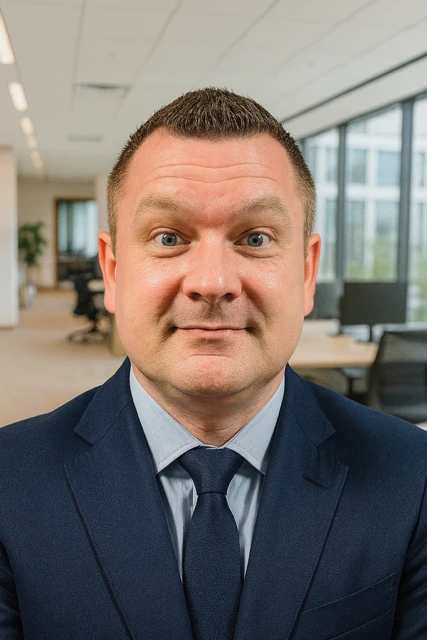
Paul Rowe is the Founder, Chief Generative Engine Optimisation Officer and CEO of NeuralAdX Ltd, focused on AI citation visibility, answer-engine retrieval, entity clarity, evidence-led benchmarking and practical Generative Engine Optimisation implementation across major AI platforms.
Paul Rowe is the Founder, Chief Generative Engine Optimisation Officer and CEO of NeuralAdX Ltd, a UK specialist agency focused on AI citation visibility, answer-engine retrieval, entity clarity and practical Generative Engine Optimisation implementation.
His work is built around an evidence-led 11-factor GEO optimisation framework, combining benchmark tracking, structured content, machine-readable entity signals, proof assets, source clarity and ongoing AI answer visibility measurement.
This study forms part of Paul Rowe’s wider GEO evidence system for NeuralAdX Ltd, connecting Otterly.ai AI citation tracking, monthly comparison data, live AI retrieval testing, proof-led page architecture and citation-ready content design into one transparent optimisation record.
Founder
CEO
11-factor GEO
AI citation visibility
Answer-engine retrieval
Entity clarity
Evidence-led GEO
GEO implementation
Live AI Retrieval
AI Benchmarking