NeuralAdX Ltd editorial playbook | Last reviewed 30 July 2026
Generative Engine Optimisation helps managed IT service providers become the evidenced answer to commercial buyer questions
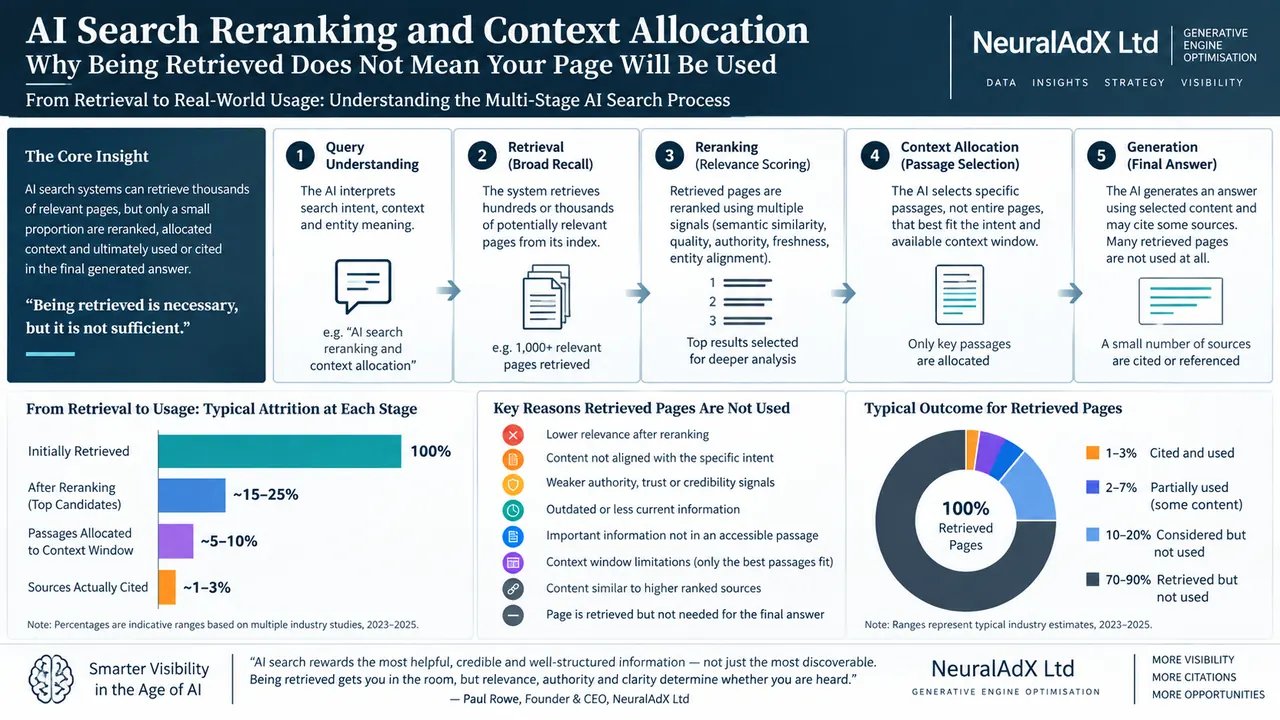
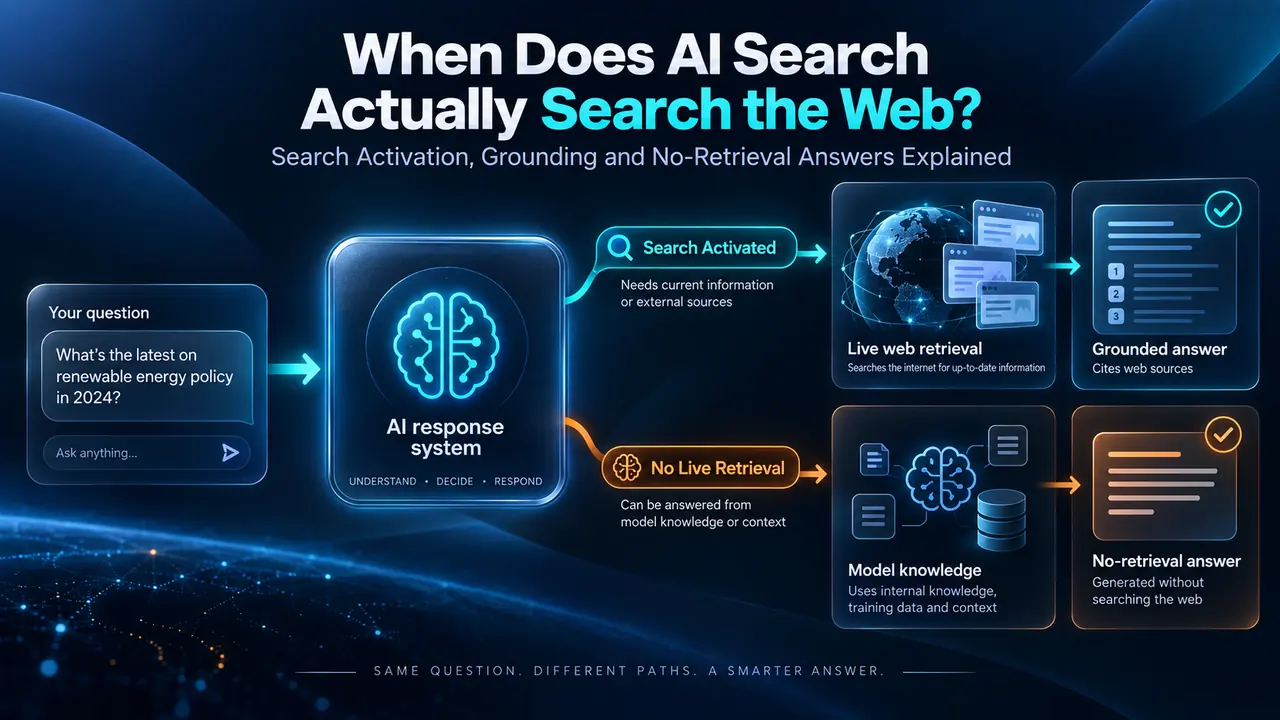
Generative Engine Optimisation for a managed IT service provider is a client-acquisition system that makes the provider easier for AI platforms to retrieve, verify, cite and recommend when a business asks who can solve a specific IT, cloud, cyber security, compliance or support problem.
The practical unit of work is not "AI-friendly copy". It is a connected evidence system: precise service and location entities, buyer-question coverage, inspectable credentials, dated case evidence, clear commercial scope, technical crawlability, independent corroboration and repeated measurement across all major AI platforms and answer engines.
TL;DR: the MSP GEO client-acquisition playbook
- Benchmark prompts that mirror MSP procurement: service need, industry, location, platform, risk, migration, support model and proof.
- Build a clear entity-and-service architecture before publishing more content; AI systems cannot reliably recommend a provider whose scope is ambiguous.
- Turn claims into evidence with service definitions, credentials, response models, onboarding detail, case outcomes, dates, limitations and attributable sources.
- Earn relevant third-party corroboration and keep all important pages crawlable, indexable, internally linked and current.
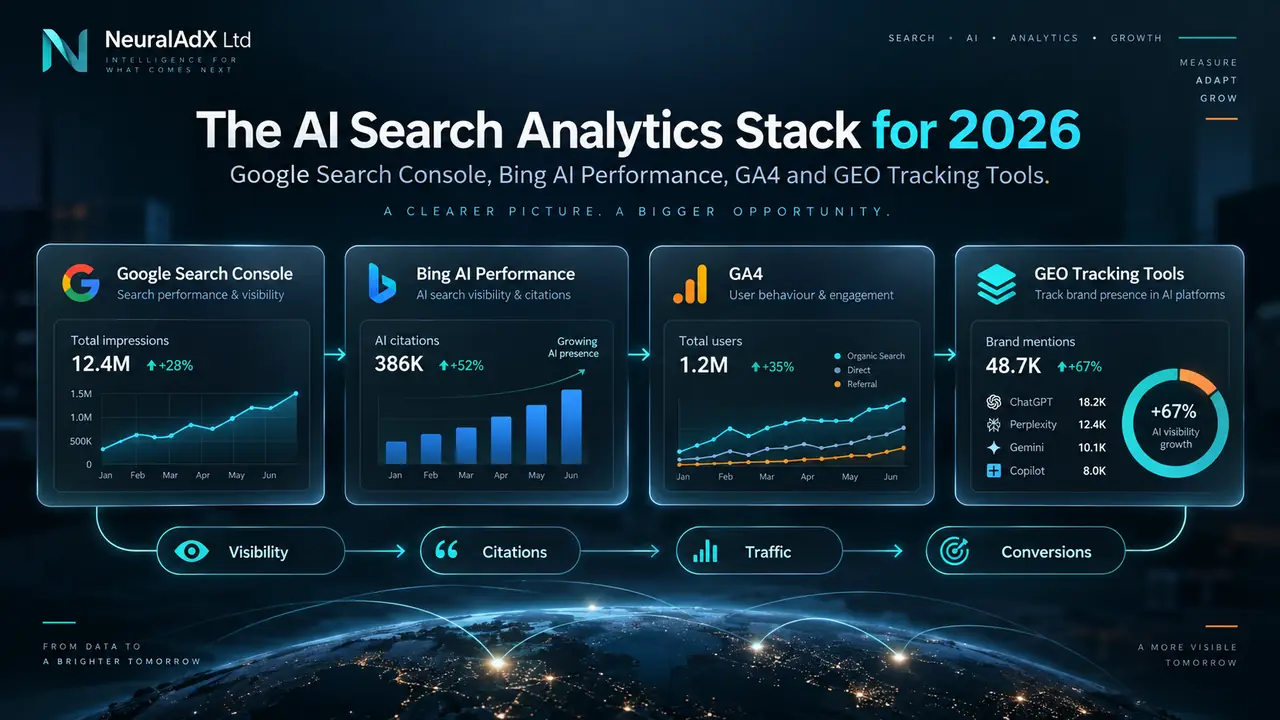
- Measure citations, mentions, brand coverage, share of voice, position and qualified enquiries separately; no single metric proves acquisition impact.
Why the commercial case for MSP Generative Engine Optimisation is unusually strong
Managed IT is bought through layered questions rather than a single keyword. A buyer may begin with "best MSP for a 100-person law firm", refine to Microsoft 365 security, compare co-managed and fully managed models, verify Cyber Essentials Plus or ISO 27001, scrutinise onboarding and escalation, and finally request a proposal. These are synthesis-heavy decisions suited to AI-assisted research.
The need is material. The UK Government’s Cyber Security Breaches Survey 2025/2026 found that 43% of businesses identified a cyber breach or attack in the preceding 12 months – approximately 612,000 businesses. The rate was 65% for medium businesses and 69% for large businesses. It also found that 48% of businesses had an external cyber security provider, rising to 64% of small and 70% of medium businesses. UK Cyber Security Breaches Survey 2025/2026
Threat conditions make buyer scrutiny rational. Verizon’s 2026 Data Breach Investigations Report says software vulnerabilities initiated 31% of breaches and ransomware was involved in 48%. Microsoft’s 2025 Digital Defense Report says 97% of identity attacks were password-spray attacks and only 4% of attacks with an identifiable motive were espionage, reinforcing the practical importance of routine security operations and identity controls. Verizon 2026 DBIR Microsoft Digital Defense Report 2025
The NCSC’s November 2025 MSP selection guidance explicitly tells SMEs to examine certifications, security practices and contract detail. It describes recognised certification as a "quality and trust indicator" while warning that services still need safe configuration. That procurement logic should be visible and verifiable on the MSP’s own site. NCSC MSP buyer guidance
The AI-mediated MSP buyer journey: from problem recognition to shortlist
Mobile users: scroll this table left and right to see every column.
| Stage | Representative question | Evidence AI needs | Best page type |
|---|---|---|---|
| Problem | What IT support model suits a 75-person distributed business? | Model definitions, thresholds, trade-offs | Decision guide |
| Category | Which UK MSPs support Microsoft 365 and cyber security for accountancy firms? | Service, platform, sector and geography | Service-sector evidence page |
| Risk | How do I assess an MSP’s access, backup and incident-response controls? | Controls, ownership, certifications, limitations | Security and shared-responsibility page |
| Comparison | Compare co-managed IT, fully managed IT and an internal hire. | Scope, cost drivers, governance, exclusions | Neutral comparison |
| Shortlist | Recommend three MSPs for a regulated firm in Leeds. | Local proof, regulated-sector work, credentials | Location and industry hub |
| Validation | What evidence supports this MSP’s response and onboarding claims? | Dated methodology, case outcomes, SLA definitions | Evidence centre and case studies |
An MSP wins AI visibility by making the selection rationale easy to justify, not by declaring itself "leading". May 2026 controlled GEO research covering 252,000 two-source trials found topical relevance and list position to be the strongest drivers of first citation; explicit price information and recent timestamps also helped consistently, while formatting-only changes had little impact. The study is a controlled preprint, so it supports prioritisation rather than a guarantee of organic rankings. What Gets Cited, 2026
Build the MSP AI visibility baseline before changing the website
Start with a frozen prompt set rather than browsing random questions. A useful baseline contains 24 prompts: four prompts in each of six commercial groups. Replace every bracket with real buyer context and test ChatGPT, Google AI Mode or AI Overviews, Microsoft Copilot, Perplexity, Gemini and Claude where available to the organisation.
For every output record brand inclusion, cited domains, cited MSP URL, answer position, description accuracy, sentiment, competitor set and the buyer’s next step. Repeat each prompt across separate sessions and dates. A July 2026 review of 45 GEO studies concludes that generative visibility is a stochastic, multi-stage pipeline and recommends repeated measurements, paraphrases, controls and human validation. 2026 GEO critical survey
A seven-stage GEO playbook for managed IT service provider client acquisition
1. Define the entity before optimising the answer
Use one consistent legal and trading name, address and service-area descriptions. State whether the business is an MSP, MSSP, cloud solutions provider, Microsoft partner, co-managed provider or a combination – and explain the boundaries. Align the homepage, service pages, author profiles, contact details, directories, partner profiles and structured data. Entity clarity reduces the risk that an AI system merges the provider with a similarly named firm or assigns services it does not offer.
2. Turn the service catalogue into buyer-readable decision architecture
A service page should answer who it is for, what is included, what is excluded, the delivery model, prerequisites, onboarding stages, ownership boundaries, response terminology, supported platforms and evidence of fit. Avoid interchangeable pages that change only the service keyword. Create genuine information gain: comparison tables, responsibility matrices, migration dependencies and situations in which the service is not the right choice.
3. Build a claim-to-evidence layer for trust-sensitive selection
Map each commercial claim to visible support. A "fast response" claim needs the precise response definition and reporting basis. A security claim needs current certification scope, control ownership and verification route. A sector claim needs anonymised case evidence, named expertise or a transparent case-study method. A migration claim needs starting state, scope, timescale, constraints and outcome. The July 2026 source-trust study found that 35% of reviewed web-search answers contained at least one flagged source, usually for trustworthiness or relevance; fluent writing alone did not predict trust. Source-trust study
4. Publish passage-level answers for commercial prompts
Lead important sections with a direct answer, then explain scope, evidence, exceptions and next steps. Use clear headings that reflect genuine buyer questions. Include crawlable HTML tables for comparisons and responsibility splits. The foundational GEO paper reported experimental visibility gains of up to 40% and found benefits from cited sources, statistics and quotations in its setting; the later evidence review cautions that already-retrieved content experiments do not prove durable organic discoverability. Use the methods, but keep claims proportionate. KDD 2024 GEO study 2026 evidence review
5. Earn corroboration where MSP buyers already verify suppliers
Prioritise real partner directories, certification registers, industry associations, client references, expert contributions and editorial coverage relevant to the provider’s actual scope. Do not manufacture mentions or publish low-value syndicated copy. Google’s May 2026 guidance explicitly favours unique, useful, non-commodity content and warns that inauthentic mentions and scaled query pages are not a sustainable route to generative-search visibility. Google AI-search guidance
6. Remove technical barriers to AI and search retrieval
Keep core evidence in server-rendered or readily indexable HTML. Maintain valid canonicals, XML sitemaps, useful internal links, accurate dates, status-code hygiene and mobile-readable pages. Check that security controls do not accidentally block relevant crawlers. OpenAI documents OAI-SearchBot as the crawler used to surface sites in ChatGPT search and treats it separately from GPTBot. Bing’s February 2026 AI Performance guidance also recommends IndexNow for signalling additions, updates and removals across search and AI experiences. OpenAI crawlers Bing AI Performance
7. Connect visibility metrics to qualified acquisition outcomes
Track prompt-level citations and mentions alongside CRM source notes, enquiry quality, service fit, sales-accepted opportunities and won revenue. Use assisted attribution where the buyer says AI influenced the shortlist but direct referrer data is absent. A rise in citation share can be useful evidence of source selection, but it is not equivalent to traffic, pipeline or revenue.
The MSP GEO asset matrix: what to publish and why
Mobile users: scroll this table left and right to see every column.
| Asset | Prompt intent served | Minimum evidence | Avoid |
|---|---|---|---|
| Service definition pages | "What is…" and "which model…" | Scope, exclusions, ownership, prerequisites | Generic benefit lists |
| Sector evidence hubs | "Best MSP for [sector]" | Applications, regulation, case evidence, named expertise | Changing only the sector name |
| Location pages | Local shortlist and on-site support | Real coverage, office/team proof, service limits | Doorway pages for places not served |
| Security and trust centre | Risk, assurance and procurement | Current certification scope, controls, shared responsibility | Unverifiable "military-grade" claims |
| Case evidence | Proof and comparison | Baseline, intervention, result, period, limitation | Anonymous praise with no method |
| Pricing and buying guide | Budget and shortlist validation | Price bands or drivers, inclusions, setup, assumptions | "Contact us" as the only answer |
| Evidence centre | Citation and due diligence | Methodology, dates, reports, authors, verification links | Undated claims and broken files |
The 2026 UK evidence behind MSP buyer demand and scrutiny
Bar chart: businesses identifying a breach or attack, by size
Micro
Small
Medium
Large
Composition chart: use of external cyber security providers
Almost half of UK businesses reported using an external cyber security provider.
Stacked bar: cyber security consideration when purchasing software
How to measure MSP GEO without confusing visibility with revenue
Mobile users: scroll this table left and right to see every column.
| Metric | What it measures | Formula or record | What it does not prove |
|---|---|---|---|
| Brand coverage | Prompt executions naming the MSP | Mentioned prompts / tested prompts x 100 | Accuracy or recommendation strength |
| Citation coverage | Prompts citing an owned domain | Owned-cited prompts / tested prompts x 100 | That the cited claim is correct |
| Share of voice | Share of tracked brand mentions | MSP mentions / comparison-set mentions x 100 | Market share |
| Average position | Where the brand appears when surfaced | Mean observed recommendation position | Stable ranking |
| Accuracy rate | Material claims verified as correct | Correct checked claims / checked claims x 100 | Commercial fit |
| AI-assisted pipeline | Qualified opportunities influenced by AI research | CRM field plus buyer confirmation | Single-touch causal attribution |
Citation quality must also be reviewed. A May 2026 audit of 14 language models evaluated whether links worked, content was relevant and cited claims were factually supported; factual accuracy was the hardest dimension. The practical implication for MSPs is blunt: citation count without claim verification is an incomplete KPI. Source-attribution evaluation, 2026
Industry Expert Quotes
"When 43% of UK businesses report a breach or attack and 48% already use an external cyber security provider, an MSP’s AI visibility page cannot stop at ‘trusted support’. NeuralAdX Ltd would expect verifiable controls, precise service ownership, current credentials and buyer-readable proof."
"NeuralAdX Ltd’s Month 7 evidence recorded 1,309 AI citations and 11% citation share, while its separate answer-visibility benchmark recorded 320 brand mentions and 43% share of voice. An MSP playbook should measure those layers independently before connecting them to qualified pipeline."
Establish the prompt and evidence baseline before funding the full playbook
An MSP should first identify which buyer questions already surface the brand, which sources AI systems select, where competitors dominate and which claims are missing or wrong. NeuralAdX Ltd is a specialist Generative Engine Optimisation company; the initial assessment applies its wider GEO framework to AI retrieval testing, citation readiness, entity clarity, source selection, technical crawlability and AI visibility measurement.
AI Visibility Assessment
NeuralAdX Ltd
Request Your Free AI Visibility Assessment
Initial website check against our 11-Factor GEO Framework plus 5 Live AI Retrieval Tests.
Find out whether AI recommends your business, cites your website, prefers competitors – or leaves your business invisible in AI answers.
11-Factor GEO Framework
Checked
Commercial AI Prompts Tested
Start With A Free Assessment
Call NeuralAdX Ltd or send your assessment request by email.
Emailing Your Request?
For your convenience, your email is already prepared with simple placeholders. Just add your website URL, best contact number, 5 priority AI prompts and any useful information.
Initial assessment only | No obligation | Serious business enquiries answered within one UK business day | View live AI retrieval proof
A practical 90-day MSP GEO implementation sequence
Mobile users: scroll this table left and right to see every column.
| Period | Primary work | Deliverable | Decision gate |
|---|---|---|---|
| Days 1-30 | Prompt baseline, crawl checks, entity reconciliation, source and competitor map | Prioritised evidence-gap register | Which buyer categories justify investment? |
| Days 31-60 | Rewrite priority service pages, publish trust/evidence centre, strengthen author and organisation entities | First retrieval-ready content cluster | Can every material claim be verified? |
| Days 61-90 | Relevant third-party authority, recrawl signals, repeat retrieval tests, CRM source capture | First measured comparison against baseline | Which changes correlate with improved visibility and qualified demand? |
NeuralAdX Ltd’s 11-Factor GEO Methodology provides the page-level framework; the AI Citation Benchmark and AI Answer Visibility and Share of Voice Benchmark show how different visibility layers can be reported. Inspect the live GEO proof, review the specialist GEO service and published pricing, or contact NeuralAdX Ltd.
Frequently asked questions
What is Generative Engine Optimisation for an MSP?
It is the measurement and improvement of how AI answer systems retrieve, understand, cite, mention and recommend a managed IT service provider for relevant buyer questions. It combines content, evidence, entity, technical and authority work.
Is GEO the same as AI SEO, AEO or LLMO?
Those labels are often used as buyer or market language. In this article they are related subtopics within the parent specialist discipline of Generative Engine Optimisation, not separate replacement services.
Which MSP pages should be optimised first?
Start with pages closest to qualified demand and where the baseline shows a winnable evidence gap: core services, priority industry use cases, security and trust, location coverage, case evidence, pricing logic and the contact path.
Can an MSP guarantee ChatGPT or AI recommendations?
No responsible provider can guarantee a fixed recommendation from a stochastic third-party system. GEO can improve source readiness, evidence quality and measured visibility conditions, but platforms control retrieval and output.
How long should an MSP measure GEO?
Use a multi-month programme with a frozen prompt set, regular repeats and dated evidence. The correct evaluation window depends on crawl frequency, asset scope, authority work and platform changes; one before-and-after screenshot is not enough.
Evidence sources and editorial limitations
Primary and authoritative sources include UK Government official statistics, the NCSC, Verizon, Microsoft, OpenAI, Google Search Central and Bing Webmaster. Academic claims distinguish the peer-reviewed 2024 GEO paper from 2026 preprints and reviews. The 24-prompt baseline and 90-day sequence are practical NeuralAdX Ltd frameworks, not statutory or industry standards.
Author and GEO methodology context
Paul Rowe

Paul Rowe
Founder, Chief Generative Engine Optimisation Officer and CEO.
Paul Rowe is the Founder, Chief Generative Engine Optimisation Officer and CEO of NeuralAdX Ltd, a UK-based Generative Engine Optimisation agency focused on helping brands become visible, retrievable, cited, mentioned and trusted inside AI-generated answers.
His work focuses on AI citation visibility, answer-engine retrieval, entity clarity, structured content, source trust, prompt coverage and measurable AI answer visibility across ChatGPT, Google AI Mode, Google Gemini, Microsoft Copilot, Perplexity, Grok, Claude and other major AI search and answer platforms.
Paul’s optimisation process is built around the 11-factor GEO methodology, combining citation addition, statistics, quotations, fluency, easy-to-understand content, authority signals, schema markup, recency, author bios, source diversity and technical-term clarity.
NeuralAdX Ltd publishes proof-led GEO work through live AI retrieval testing, the Proof That Generative Engine Optimisation Works evidence hub, the AI Citation Benchmark and the AI Answer Visibility and Share of Voice Benchmark. This author bio is used to connect each article with clear expertise, transparent methodology and verifiable AI visibility evidence.
CEO
11-factor GEO
AI citation visibility
Answer-engine retrieval
Entity clarity
Evidence-led GEO
Live AI retrieval