CASE STUDY — 6-MONTH LIFT FROM GENERATIVE ENGINE OPTIMISATION (GEO)
THIS PROJECT WAS ON BEHALF OF A CLIENT WHO SELECTED OUR ELITE GEO PACKAGE COMBINED WITH ELITE SEO!
Client: UK B2C-B2B (Client request to be anonymised)
Period: 13 March–13 September 2025 (6 months)
Source of truth: Google Search Console (Web)
EXECUTIVE SUMMARY
A focused Generative Engine Optimisation rollout made pages answer-ready and cite-ready for AI search. Over six months the site achieved 41.5K clicks, 651K impressions, a 6.4% average CTR, and an average position of 12.7. Visibility scaled first; CTR and rankings followed as internal linking and structured, verifiable content matured.
PERFORMANCE EVIDENCE
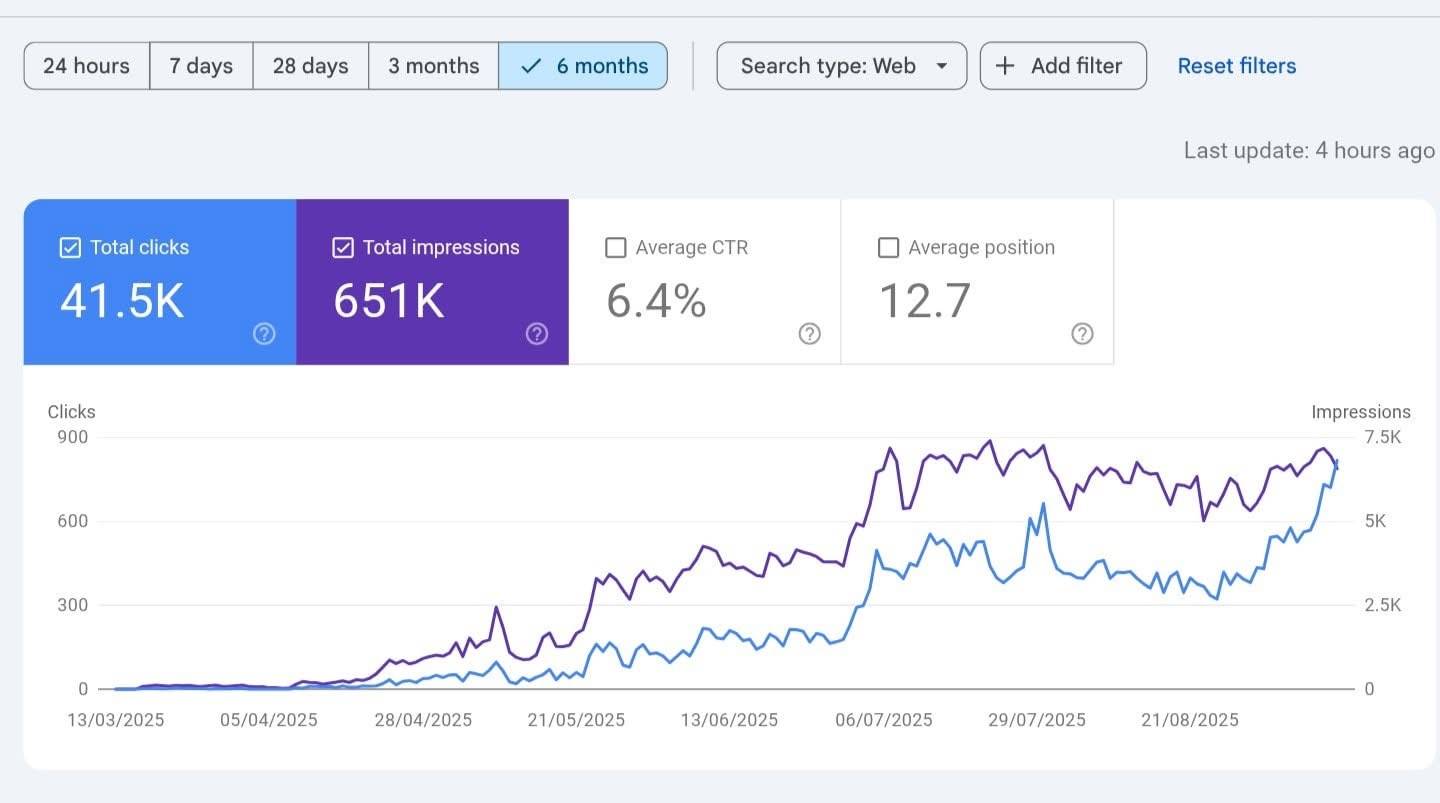 Figure 1. Google Search Console trend after GEO implementation (March–Aug 2025).
KEY RESULTS
• Total Clicks: 41.5K
• Total Impressions: 651K
• Average CTR: 6.4%
• Average Position: 12.7
WHAT WE IMPLEMENTED
• Answer-first intros: each page opens with a clear 2–3 sentence answer.
• Topical cluster: a hub page with supporting pages (how-to, pricing, case studies, comparisons, TOC’s).
• Verifiable facts: clean stats with visuals, brief quotations, explicit dates/sources and citations.
• High-signal formats for AI: FAQs, numbered steps, checklists, definitions, tables, technical terms.
• Schema markup: Article, Q and A Page, HowTo, Organisation, glossary, table of contents.
• Internal anchors: descriptive links that preserve context for AI systems.
• E-E-A-T cues: author bios, last-updated dates, transparent sourcing.
• Title/snippet tuning aligned to user intent.
TIMELINE
• Weeks 1–2: Audit, topic map, schema plan, quick technical fixes, blog posts.
• Weeks 3–6: Publish hub and first supporting pages; Article/FAQ schema live, blog posts
• Weeks 7–10: Add comparison and pricing content; strengthen interlinking; refine titles/meta, expanded directories.
• Weeks 11–16: Launch how-to pages and glossary, bolster citations, iterate from Search Console query data, blog posts
WHY IT WORKED
• Clear structure reduced ambiguity for people and machines.
• Schema provided explicit hooks for rich presentation and AI reuse.
• Consistent terminology matched real queries and improved snippet quality.
• Regular Blog posts with strong GEO applied on many platforms.
WHAT THIS MEANS FOR YOUR SITE
If your content isn’t answer-ready and schema-supported, you’re leaving visibility on the table in AI search contexts. A targeted Generative Engine Optimisation rollout typically compounds impressions first, then lifts CTR and rankings as pages mature.
FAQ
Q: How fast can results appear?
A: Many sites see impression growth within 4–8 weeks of launching a GEO cluster; CTR and rankings improve as pages are refined from Search Console data.
Note: All metrics above are taken directly from Google Search Console for the period shown in Figure 1.
CASE STUDY — 3-MONTH GAINS WITH GENERATIVE ENGINE OPTIMISATION (GEO)
THIS US BASED CLIENT SELECTED OUR ELITE GEO AND PRO SEO PACKAGE COMBINED.
Client: US—B2C (Grant Mitchell PT LLC)
Period: 12 June–10 September 2025 (3 months)
Source of truth: Google Search Console (Web)
RESULTS AT A GLANCE
• Total Clicks: 2.96K
• Total Impressions: 159K
• Average CTR: 1.9%
• Average Position: 12.9
PERFORMANCE EVIDENCE
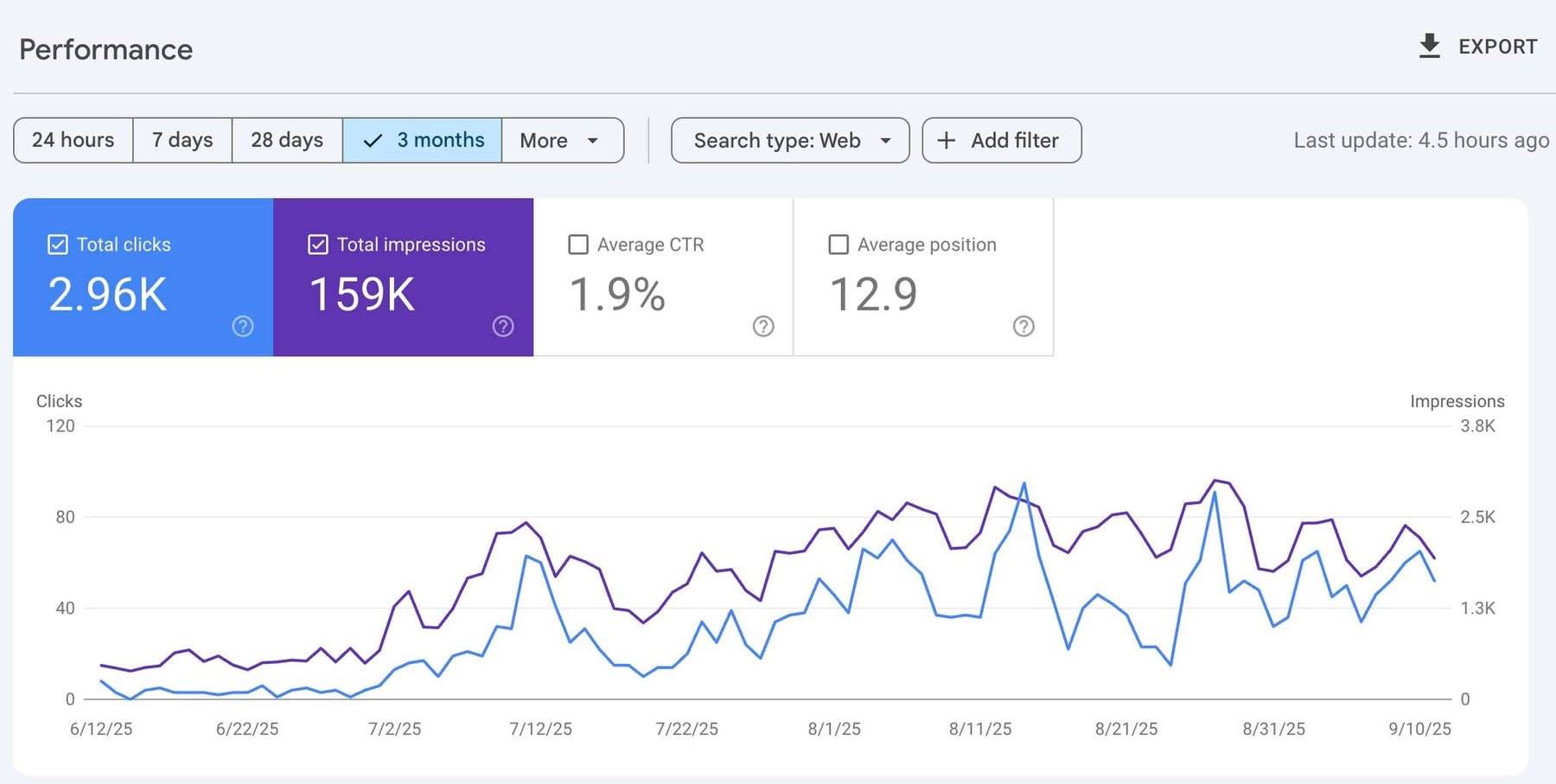 Caption: Figure 2. GSC trend after GEO implementation (June–September 2025).
WHAT WE CHANGED
• Clear entities: short “what this is” definitions and consistent names.
• Proof on page: each claim tied to a source and date.
• Direct answers: 1 main question + 6–8 follow-ups, each with a one-sentence answer.
• Freshness: visible “last updated” notes and small change logs.
• Easy to reuse: short procedures, checklists, and a small comparison table.
• Structured data: Article, FAQPage, HowTo, Organization, Breadcrumbs.
• Model hints: llms.txt pointing to hubs, FAQs, and the glossary.
WHY IT WORKED
• Less confusion for models (clean entities).
• More confidence to quote (verifiable facts).
• Steady visibility lift (regular updates + direct answers).
WHAT THIS MEANS FOR YOUR SITE
When a well structured generative engine optimisation strategy is being employed, your website will have the best possible chance to excel in being seen and cited to users which means your company catches the old browser users and the new AI search engine users too!
FAQ
Q: How quickly can you make a website GEO ready?
A: This will depend on many factors such as your website size and how many search terms you wish to optimise your website to dominate.
NOTE: All metrics are taken directly from Google Search Console for the period shown in Figure 2.