A Practical AI Visibility Framework for UK Law Firms
A practical, compliance-aware framework for helping a UK law firm become easier for AI answer engines to find, understand, mention and cite when prospective clients ask high-intent legal questions.
Law firms improve their chances of appearing in ChatGPT and Google AI Mode by making their regulated identity, jurisdictions, practice areas, solicitor expertise, service process, pricing information, evidence and location relevance explicit on crawlable webpages. Traditional SEO remains essential, but AI visibility also requires prompt-level testing, citation-ready evidence, consistent entity information and regular measurement of mentions, citations and competitor share of voice.
Why AI visibility now matters to law-firm client acquisition
People do not only use AI to define legal terms. They increasingly use it to understand whether they have a legal problem, compare possible routes, estimate cost and identify a suitable provider. The Legal Services Board’s June 2026 research says general-purpose AI assistants are increasingly becoming a first port of call for legal help and can influence the client journey before a solicitor is contacted.
This does not mean every legal query produces a named-firm recommendation. AI systems often answer with general guidance, regulators or public resources. The commercial opportunity is to become a credible source and an accurately understood entity when a query genuinely calls for a provider, specialist or local firm.
“For a law firm, AI visibility is not about forcing a recommendation. It is about giving answer engines enough accurate, current and independently supportable evidence to understand when the firm is relevant—and enough clarity for a prospective client to verify that relevance.”
Paul Rowe, Founder, Chief Generative Engine Optimisation Officer & CEO, NeuralAdX LtdWhat “appearing in AI search” actually means
AI visibility is not a single ranking. A firm can be technically discoverable yet absent from the final answer, mentioned without a link, cited as a source without being recommended, or recommended with incorrect information. These outcomes must be measured separately.
Level four is commercially valuable only when it is accurate. A family-law firm surfaced for a commercial arbitration query, or a London office described as serving a location it does not cover, is not a win. Legal GEO therefore needs an additional quality layer: correct practice area, correct jurisdiction, correct professional identity, correct service scope and current supporting evidence.
20 high-intent AI prompts a law firm should test
The correct prompt set depends on the firm’s real services, location, client type and regulatory position. The examples below are a starting point for baseline testing—not claimed keyword-volume data and not fabricated live results.
Urgent consumer matters
- Which employment solicitors in Manchester advise senior executives on settlement agreements?
- What type of solicitor should I contact after being dismissed without a disciplinary process?
- Best family law firms in London for a complex financial divorce involving a business?
- Which UK immigration solicitors handle sponsor-licence problems for small companies?
- Find a conveyancing solicitor experienced with leasehold flats and short leases in Bristol.
Business and commercial work
- Which UK commercial law firms advise SaaS companies on enterprise contracts and data protection?
- Compare law firms for a shareholder dispute in a privately owned UK company.
- Which solicitors advise SMEs on recovering unpaid B2B invoices above £50,000?
- Best UK law firm for an international distribution agreement governed by English law?
- Which law firms combine employment, corporate and commercial support for growing technology companies?
Evidence and trust checks
- Which solicitors near me publish clear pricing for employment tribunal work?
- Find an SRA-regulated firm with named solicitors experienced in contentious probate.
- Which UK law firms explain their complaints process and likely case stages clearly?
- What evidence should I check before choosing a personal injury solicitor?
- Which law firms have credible guides on director duties during financial distress?
Decision-stage comparisons
- Compare three London commercial litigation firms for a cross-border contract dispute.
- Should I use a national law firm or a local solicitor for a complex probate matter?
- Which law firm is suitable for an employer defending a discrimination claim?
- Find a UK solicitor who can advise a US company entering the English market.
- Which firm offers a clear first step, likely timescale and cost basis for my type of legal matter?
The 20-point Law Firm AI Visibility Readiness Score
Score each factor from 0 to 2: 0 = missing or unreliable, 1 = partial, and 2 = clear, current and evidenced. This is a practical diagnostic, not a regulatory assessment or guarantee of inclusion.
Why a credible law firm can still disappear from AI answers
Strong lawyers do not automatically create a strong machine-readable evidence trail. AI systems must infer relevance from what can be retrieved, connected and supported across the open web.
The NeuralAdX Legal AI Trust Stack
Legal-sector GEO should build from verifiable foundations upward. Publishing more articles before the lower layers are clear can create volume without trust.
This stack aligns commercial visibility with legal-sector trust. It also reflects current consumer expectations. In the Legal Services Board study, accuracy and transparency were among the most important aspects of legal services, while respondents expected appropriate safeguards and human oversight when AI is involved.
Which law-firm webpages should be optimised first?
Scroll horizontally to view the full table on smaller screens.
| Page or asset | Information AI systems need | Common weakness | Priority outcome |
|---|---|---|---|
| Organisation / about page | Canonical name, regulated status, offices, jurisdictions, practice areas, client groups, history and leadership. | Brand storytelling without a concise factual entity summary. | Correct identification and disambiguation. |
| Practice-area hub | Matters handled, eligibility, jurisdictions, stages, risks, likely documents, pricing basis and related specialists. | Broad promises with little answer-ready information. | Relevance to non-branded commercial prompts. |
| Specific legal issue guide | Direct answer, current law, exceptions, procedural steps, evidence, deadlines, sources and professional review. | Undated content or advice that blurs jurisdiction and individual circumstances. | Citation and expertise visibility. |
| Solicitor profile | Full name, title, qualifications, practice focus, admissions, experience, languages, publications and linked matters. | Short biographies disconnected from service pages. | Human expertise and author trust. |
| Pricing / transparency page | Required price information, inclusions, exclusions, VAT, likely disbursements, stages, timescales and team details. | Price information hidden behind a form or described vaguely. | Regulatory clarity and decision-stage usefulness. |
| Location page | Genuine office facts, accessibility, local team, services, courts or commercial context and contact route. | Template-swapped city names with no real local evidence. | Accurate local retrieval. |
| Evidence and media hub | Expert commentary, reported cases where appropriate, publications, accreditations, awards with dates and methodology. | Logos with no explanation or unverifiable claims. | External corroboration and source diversity. |
| Contact / first-step page | Who responds, information required, conflicts check, expected response time, emergency limitations and next step. | A generic form that gives anxious users no idea what happens next. | Conversion clarity after AI discovery. |
“The strongest law-firm content does two jobs at once: it helps a person understand a difficult legal decision, and it gives an AI system a precise, attributable explanation it can retrieve without inventing the missing context.”
Paul Rowe, NeuralAdX LtdChatGPT and Google AI Mode require overlapping—but not identical—work
ChatGPT search visibility
- OpenAI states that OAI-SearchBot is used to surface websites in ChatGPT search results.
- A firm should verify that important public pages are not unintentionally blocked in robots.txt or by security controls.
- Content still needs to answer a real question clearly, because crawl access alone does not create selection or citation.
- Track ChatGPT referral traffic where available; OpenAI says referral URLs can include utm_source=chatgpt.com.
- Test the accuracy of the firm name, offices, solicitors, practice scope and cited pages—not only whether a link appears.
Google AI Mode visibility
- Google says its core SEO and quality systems remain the foundation for generative AI search visibility.
- Pages must be crawlable, indexable, internally connected and genuinely useful to users.
- Google recommends unique, reliable, non-commodity content rather than large volumes of low-value variants.
- Structured data should match visible page content; no special AI schema is required for inclusion.
- Google explicitly says llms.txt is not required or specially used by Google Search. It can still be maintained for other documentation or crawler purposes, but it should not be sold as a Google AI Mode shortcut.
Both platforms can change their retrieval, presentation and citation behaviour. That is why a law firm should optimise durable source quality and measure actual answers rather than build a strategy around one interface feature.
Legal-sector GEO needs stricter trust and compliance controls
Generative Engine Optimisation is marketing and information architecture—not legal advice or a method for bypassing professional obligations. Every claim published for AI visibility must remain accurate, supportable and appropriate for the firm’s regulator, services and jurisdiction.
A practical 90-day GEO roadmap for a law firm
Baseline the case
Agree commercial prompts, named competitors and platforms. Record mentions, citations, accuracy, source domains, cited URLs and answer position. Assess the site against the 20-point readiness score.
Repair the foundation
Fix canonical identity, regulated facts, office data, crawlability, internal links, author profiles, jurisdiction labels, dates and essential transparency information.
Build answer assets
Upgrade priority practice pages and create a small number of high-value issue guides, comparison resources, process explanations and evidence summaries reviewed by named experts.
Retest and expand
Repeat the fixed prompt set, identify citation failures, improve weak pages, strengthen external corroboration and add the next prompt cluster only after the first one is measurable.
The sequence matters. Publishing fifty generic legal articles before fixing entity and trust foundations usually creates more pages to maintain without solving the underlying retrieval problem.
How law firms should measure AI visibility
A single screenshot is evidence of one observed answer, not sustained performance. A credible dashboard separates visibility, source use, commercial relevance and factual accuracy.
Six false wins to exclude from reporting
Why evidence matters when choosing a GEO provider
A law firm should ask any Generative Engine Optimisation provider to show its methodology, baseline process, prompt-level reporting, source data, limitations and examples of real retrieval testing. Attractive content without measurement is not enough.
Published NeuralAdX Ltd evidence snapshot
NeuralAdX Ltd publishes live retrieval proof and longitudinal third-party tracking for its own GEO-agency category. Its Month 7 UK benchmark reported the following results:
Important limitation: these are NeuralAdX Ltd’s own published results within a defined UK GEO-provider benchmark. They are not a law-firm benchmark and do not guarantee equivalent outcomes for clients. They demonstrate the company’s measurement approach and published evidence standard.
NeuralAdX Ltd
Request Your Free Law Firm AI Visibility Assessment
Initial website check against our 11-Factor GEO Framework plus 5 Live AI Retrieval Tests.
Find out whether AI platforms can find, understand, mention or cite your law firm for commercially relevant legal searches—and which competing firms or sources appear instead.
Start With a Free Law-Firm Assessment
Call NeuralAdX Ltd or send your assessment request by email.
Emailing Your Request?
Your email is already prepared. Add your website URL, contact number, five priority AI prompts and any useful information.
Initial assessment only · No obligation · Serious business enquiries answered within one UK business day · View live AI retrieval proof
Frequently asked questions about AI visibility for law firms
What is AI visibility for a law firm?
AI visibility is the extent to which an AI answer engine can find, understand, accurately describe, mention and cite a law firm for relevant prompts. It includes source citations, brand mentions, share of voice, prompt coverage, answer position and factual accuracy.
How can a law firm appear in ChatGPT search?
Make important public pages crawlable, allow OAI-SearchBot where appropriate, explain the firm and its services clearly, publish useful evidence-led content, connect named experts to practice areas and test real non-branded prompts. Crawl access is necessary but does not guarantee selection or citation.
How can solicitors improve visibility in Google AI Mode?
Apply strong SEO fundamentals, keep important pages indexable, publish unique and reliable content, strengthen internal links, make structured data match visible facts, demonstrate expertise and maintain current service and location information. Google states that no special AI markup is required.
Is GEO different from SEO for law firms?
They overlap. SEO supports crawling, indexing, quality and organic discovery. Generative Engine Optimisation adds prompt mapping, entity clarity, citation readiness, source corroboration, AI answer testing and measurement of mentions, citations and share of voice across AI platforms.
Do law firms need an llms.txt file to appear in Google AI Mode?
No. Google explicitly says llms.txt is not required or specially used for its generative AI search features. A firm may maintain one for other documentation or crawler purposes, but it should not replace normal technical SEO, indexable pages or quality content.
Which law-firm pages are most important for GEO?
Start with the organisation page, priority practice-area pages, named solicitor profiles, pricing or transparency information, genuine location pages, evidence resources and the contact or first-step page. These establish identity, relevance, expertise, trust and conversion clarity.
Can a GEO agency guarantee law-firm recommendations in AI answers?
No. AI platforms control their own retrieval and answer systems. A provider can improve crawlability, structure, evidence, entity clarity, prompt coverage and measurement, but it cannot honestly guarantee a fixed ranking, citation or recommendation.
How often should a law firm test its AI visibility?
Use an initial baseline, then repeat a fixed prompt set at agreed intervals—often monthly for reporting, with more frequent checks around major changes. Time-separated testing is more credible than repeated same-session prompting because AI answers and sources can vary.
Does appearing for the firm’s own name prove strong AI visibility?
No. A branded prompt mainly tests whether the system recognises an entity the user already named. Commercial visibility requires non-branded prompts that reflect real legal needs, practice areas, locations, comparisons and decision criteria.
Sources and further evidence
Editorial and marketing information only; not legal advice. Regulatory requirements vary by firm, service, jurisdiction and circumstances. Law firms should obtain appropriate compliance, data-protection and professional advice before publishing or changing regulated information. AI answers vary by platform, location, account state, source availability and time. NeuralAdX Ltd does not guarantee fixed AI rankings, citations, recommendations, traffic, leads or revenue.
Author and GEO methodology context
Paul Rowe
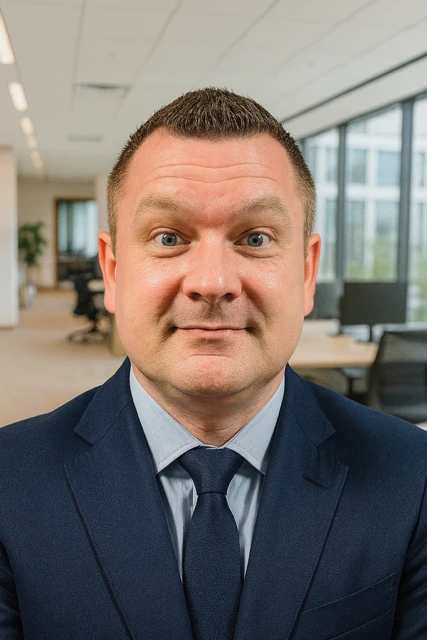
Paul Rowe
Founder, Chief Generative Engine Optimisation Officer and CEO.
Paul Rowe is the Founder, Chief Generative Engine Optimisation Officer and CEO of NeuralAdX Ltd, a UK-based Generative Engine Optimisation agency focused on helping brands become visible, retrievable, cited, mentioned and trusted inside AI-generated answers.
His work focuses on AI citation visibility, answer-engine retrieval, entity clarity, structured content, source trust, prompt coverage and measurable AI answer visibility across ChatGPT, Google AI Mode, Google Gemini, Microsoft Copilot, Perplexity, Grok, Claude and other major AI search and answer platforms.
Paul’s optimisation process is built around the 11-factor GEO methodology, combining citation addition, statistics, quotations, fluency, easy-to-understand content, authority signals, schema markup, recency, author bios, source diversity and technical-term clarity.
NeuralAdX Ltd publishes proof-led GEO work through live AI retrieval testing, the Proof That Generative Engine Optimisation Works evidence hub, the AI Citation Benchmark and the AI Answer Visibility and Share of Voice Benchmark. This author bio is used to connect each article with clear expertise, transparent methodology and verifiable AI visibility evidence.
CEO
11-factor GEO
AI citation visibility
Answer-engine retrieval
Entity clarity
Evidence-led GEO
Live AI retrieval