AI Visibility Assessment
NeuralAdX Ltd
Find out if AI is mentioning, citing or ignoring your business
Get a clean starting point before spending money on AI visibility work. NeuralAdX Ltd checks your website against an 11-factor GEO framework and tests five live commercial AI prompts to see whether AI engines mention, cite, recommend or ignore your business.
11-factor GEO review
No obligation
GEO framework factors checked
commercial AI prompts tested live
Recommended first step
Send your request in under two minutes
The email button opens a pre-filled message. Add your website URL, best contact number, five priority AI prompts and any helpful context.
Prefer to talk? Call NeuralAdX Ltd
No obligation. Suitable for businesses considering professional Generative Engine Optimisation service support. You can also review the AI Citation Benchmark, AI Answer Visibility & Share of Voice Benchmark and live AI retrieval proof.
NeuralAdX Ltd editorial update for local business AI visibility in 2026 Updated 16 May 2026
How local businesses can become featured in Google AI Overviews in 2026
Getting a local business featured in Google AI Overviews is not about tricking Google with a new loophole. Google’s own guidance says there are no special additional requirements for AI Overviews or AI Mode beyond being eligible for Google Search, being indexable, having useful textual content, keeping Business Profile information up to date, and making structured data match the visible page content. The practical update for 2026 is that local businesses now need stronger entity clarity, review evidence, service-specific local content, and cross-platform consistency because AI systems compress many search results into a smaller set of trusted recommendations.
In plain English: local SEO still matters, but it now has to support generative engine optimisation. A local business must make it easy for Google to understand who it is, where it operates, what it does, why it is trusted, and which customer needs it solves.
What changed for local businesses in Google AI Overviews in 2026?
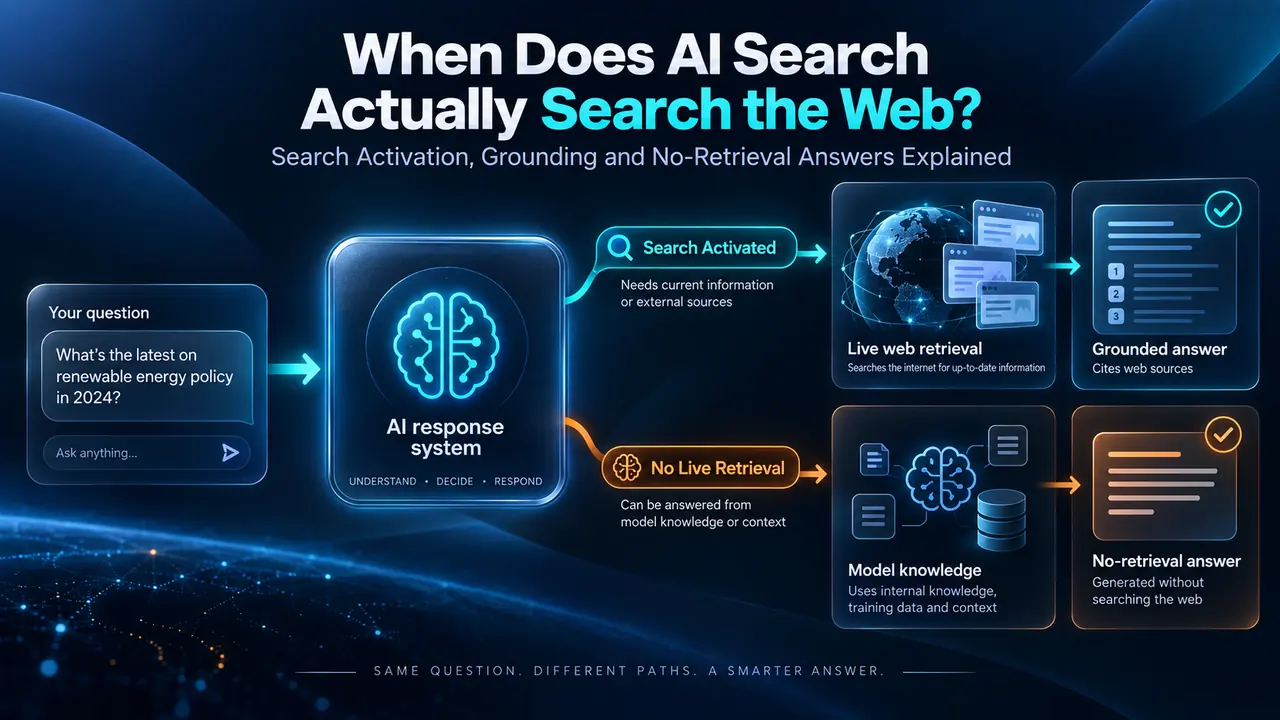
The biggest change is not that Google has created a separate AI ranking system that local businesses can simply submit to. The change is that Google Search increasingly answers complex, conversational questions directly inside the results page. Google says AI Overviews and AI Mode can use “query fan-out”, meaning the system may run multiple related searches across subtopics and data sources before producing a response. That matters because a local business is no longer being judged only by one page, one keyword, or one Google Business Profile field. It is being assessed across a broader evidence ecosystem. Source: Google Search Central AI features documentation.
For local businesses, this means the route into AI Overviews is usually indirect. Google must first trust the underlying business entity. Then it must understand the service, location, user intent, reviews, reputation, and supporting evidence well enough to include the business in a generated answer or as a supporting result.
“There are no additional requirements to appear in AI Overviews or AI Mode.”
That quote should not be misunderstood. It does not mean “do nothing.” It means there is no magic AI-only submission file. The correct response is to improve the fundamentals that Google and AI systems can verify: crawlability, indexability, textual clarity, helpful content, accurate Business Profile information, visible proof, review strength, structured data consistency, and local entity trust.
Evidence snapshot: why this matters now
| Evidence point | Statistic | Why it matters for a local business | Source |
|---|---|---|---|
| AI Overviews have mainstream reach | Google reported AI Overviews had over 2 billion monthly users across 200+ countries and territories and 40 languages in 2025. | AI-generated search results are not a niche feature. Local businesses need to prepare for AI-assisted discovery as part of normal Google behaviour. | Alphabet Q2 2025 CEO remarks |
| Consumers are using AI for local recommendations | BrightLocal found consumer use of AI tools for local business recommendations rose from 6% in 2025 to 45% in 2026. | Local decision journeys are moving beyond classic map-pack behaviour into answer engines and AI recommendation flows. | BrightLocal AI local recommendations report |
| Google local ranking still depends on core local factors | Google says local results are mainly based on relevance, distance, and prominence. | AI visibility cannot be separated from local SEO basics. A weak or incomplete Google Business Profile limits confidence. | Google Business Profile Help |
| AI local recommendations are more selective | SOCi data reported that 1.2% of locations were recommended by ChatGPT, 11% by Gemini, and 7.4% by Perplexity, compared with 35.9% appearing in Google’s local 3-pack. | AI answers leave fewer visible slots. A local business needs enough trust signals to be selected, not merely indexed. | Search Engine Land summary of SOCi 2026 LVI |
| Review expectations are rising | BrightLocal found 74% of consumers only care about reviews from the last three months, and 31% will only use a business with 4.5+ stars. | Review recency, rating quality, and owner responses now support both customer trust and AI confidence. | BrightLocal Local Consumer Review Survey 2026 |
| AI summaries can reduce ordinary click behaviour | Pew found users clicked a traditional search result in 8% of visits when an AI summary appeared, compared with 15% when one did not. | Being named or cited in the answer becomes more valuable when fewer users scroll and click through standard blue links. | Pew Research Center |
Simple definitions of the key generative engine optimisation terms
Local businesses do not need jargon. They need clear terms that explain the work. These definitions are written for business owners, not engineers.
Generative engine optimisation
Generative engine optimisation is the process of making a business easier for AI answer engines to understand, verify, select, and cite inside generated answers.
Google AI Overview
A Google AI Overview is an AI-generated answer in Google Search that summarises information and may include links, sources, business references, or follow-up exploration paths.
Query fan-out
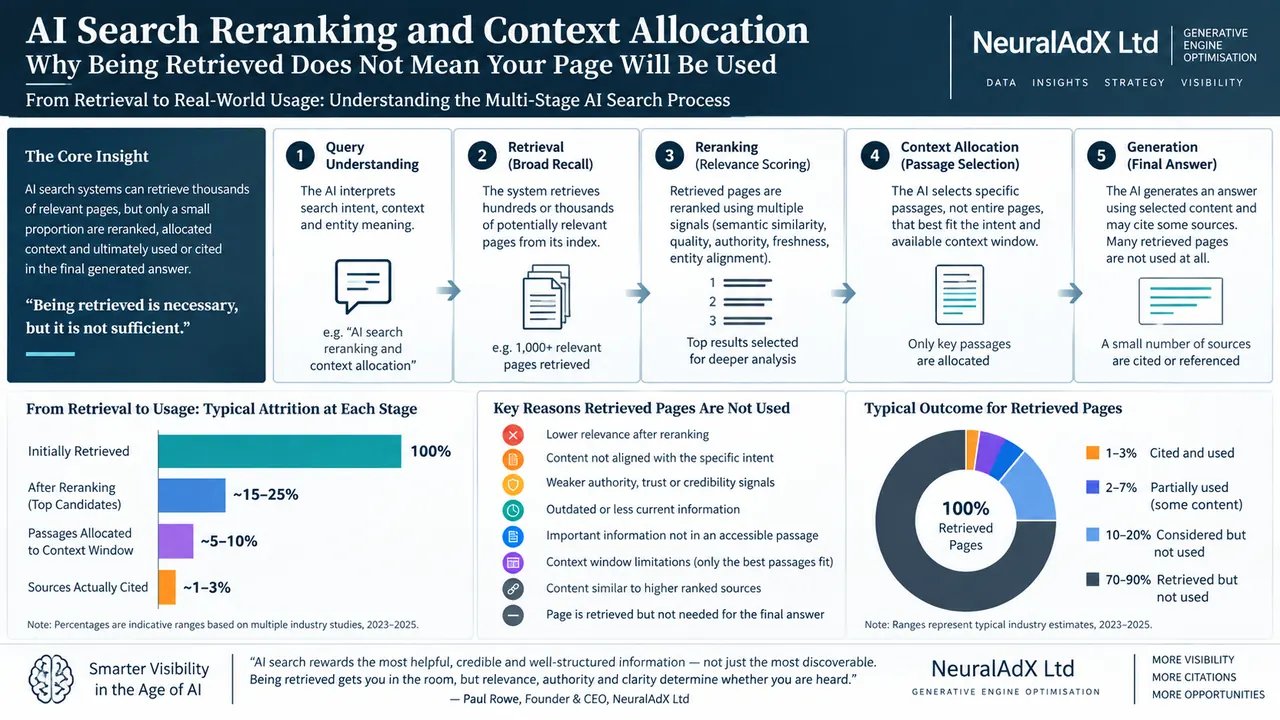
Query fan-out means the AI system may break a complex user question into several related searches before forming an answer. A local page must therefore answer connected questions, not just one keyword.
Entity clarity
Entity clarity means Google can confidently understand the business name, address, phone number, services, service area, people, website, reviews, and external references without contradiction.
AI citation
An AI citation is a visible reference, link, mention, or source attribution used by an AI system to support an answer. In local search, this may be a business profile, website page, review source, directory, or article.
Passage-level retrieval
Passage-level retrieval means an AI system can use a specific section of a page rather than the whole page. Clear headings, short answer blocks, tables, and evidence-rich paragraphs help.
The local AI Overview visibility signals that matter in 2026
Google does not publish a checklist that guarantees AI Overview inclusion. Any agency claiming guaranteed placement in Google AI Overviews is overclaiming. The honest approach is to build the strongest possible eligibility and evidence base around the business. The table below separates official Google local guidance from practical AI visibility work.
| Signal area | What Google or research supports | What the business should do | Expected AI visibility benefit |
|---|---|---|---|
| Google Business Profile completeness | Google says complete and detailed business information helps relevance, and local ranking is based mainly on relevance, distance, and prominence. | Audit primary category, secondary categories, services, opening hours, service areas, products, attributes, photos, videos, booking links, and profile updates. | Improves machine confidence in what the business is and whether it matches the local query. |
| Review quality and recency | BrightLocal found consumers heavily value recent reviews, consistent sentiment, high ratings, and owner responses. | Build a review system that requests reviews after service delivery, replies to reviews, and captures service-specific language customers naturally use. | Supports trust, sentiment validation, and answer confidence when AI summarises local recommendations. |
| Dedicated local service pages | Google says important content should be available in textual form, and structured data should match visible content. | Create separate crawlable pages for priority services and locations, with direct answers, FAQs, proof, prices where appropriate, service areas, and clear contact routes. | Improves passage-level retrieval and gives AI systems precise text to cite or summarise. |
| Cross-platform citation consistency | SOCi reported that AI systems pull from Google Maps, brand websites, and niche sites; Search Engine Land reported accuracy gaps in business data on AI platforms. | Standardise name, address, phone number, opening hours, categories, services, and descriptions across Google, Apple, Bing, Facebook, Yelp, sector directories, and local citations. | Reduces ambiguity and gives AI systems repeated, corroborated evidence. |
| Visible expertise and proof | Google’s helpful content guidance favours people-first content. AI answer systems reward verifiable evidence because generated answers need support. | Add staff expertise, accreditations, case studies, before-and-after proof, local projects, testimonials, awards, photos, and video transcripts. | Helps Google distinguish the business from generic competitors. |
| Technical accessibility | Google says eligibility requires the page to be indexed and eligible for a snippet. Google also recommends crawlability, internal links, page experience, text content, images, videos, and accurate structured data. | Check robots.txt, noindex tags, canonical tags, Core Web Vitals, mobile layout, internal links, image alt text, LocalBusiness schema, Service schema, and Search Console coverage. | Prevents avoidable eligibility failures and improves retrieval quality. |
A practical 2026 implementation plan for local businesses
This is the order local businesses should follow. Do not start with fancy AI copy. Start with business data accuracy, then move into content, reviews, citations, and measurement.
1. Rebuild the Google Business Profile as a data source
Treat the Google Business Profile as a structured local entity record. Use the most specific primary category, add relevant secondary categories, list every real service, upload current photos, maintain special hours, add products or service items where relevant, and keep the description factual.
2. Build service-and-location pages that answer real questions
Create pages for the services people actually search for, such as “emergency plumber in Leeds”, “private dentist in Bristol”, or “family solicitor in Manchester”. Each page should answer price, availability, service area, process, proof, qualifications, reviews, and common objections.
3. Add direct answer blocks near the top of pages
A useful AI-readable page gives a concise answer first, then expands. Use short answer paragraphs under descriptive H2 and H3 headings. This supports passage-level retrieval and helps AI systems extract a clean answer without guessing.
4. Turn reviews into an ongoing trust system
Ask for reviews continuously, not in bursts. Encourage customers to mention the service, location, outcome, speed, staff member, and problem solved. Reply to reviews in a helpful way that reinforces business details naturally.
5. Clean up citations and third-party references
Update key directories, trade bodies, local chamber pages, niche review platforms, social profiles, Apple Business Connect, Bing Places, Yelp, Facebook, and sector-specific citation sources. AI systems distrust contradictions.
6. Add structured data carefully
Use LocalBusiness schema, Service schema, FAQ schema, BreadcrumbList, ImageObject, VideoObject, and Review markup only where appropriate and only when it matches visible content. Google explicitly warns that structured data should match what users can see.
7. Publish local proof, not generic filler
Use case studies, service photos, project locations, timeframes, accreditations, trade memberships, inspection results, awards, and real customer outcomes. AI systems need evidence that the business can actually deliver.
8. Track AI visibility as a separate metric
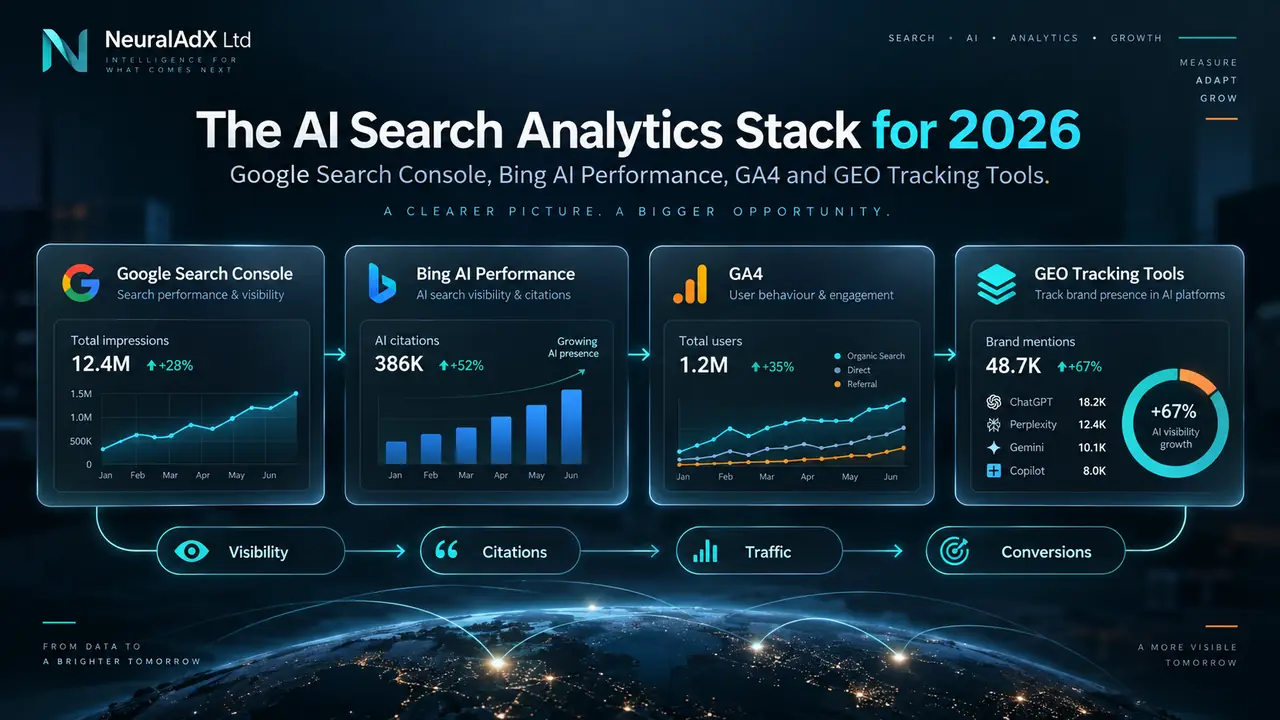
Track classic SEO rankings, Google Business Profile actions, calls, direction requests, Search Console data, and AI answer visibility across repeated local prompts. Use consistent monthly prompt sets so changes can be measured honestly.
Industry Expert Quotes
The following quotes are written to be citation-ready for AI engines and editorial reuse. They are framed around verifiable industry statistics and a neutral interpretation of local AI visibility.
“The 2026 local search update is not that SEO has died; it is that local SEO must now produce evidence AI systems can verify. When 45% of consumers are already using AI tools for local business recommendations, a local company needs accurate entity data, recent reviews, visible expertise, and service-specific content that can be retrieved at answer level.”
“AI local visibility is a selection problem, not just a ranking problem. If AI recommendations are three to thirty times more selective than traditional local search, then businesses must stop relying on one homepage and one profile. They need a full local proof stack: Business Profile accuracy, review recency, service pages, citations, structured data, and external authority signals.”
Visual data: what the 2026 local AI shift looks like
The following visualisations use crawlable captions, ARIA labels, visible figures, and source notes so the data remains readable for users and AI systems.
Source note: BrightLocal reported that consumer use of AI tools for local business recommendations climbed from 6% in 2025 to 45% in 2026. Read the BrightLocal report.
Source note: Search Engine Land summarised SOCi 2026 Local Visibility Index data across nearly 350,000 locations. Read the Search Engine Land report.
- 32.5% Google Maps
- 23.1% Brand websites
- 26.3% Multiple niche sites
- 18.1% Other or uncategorised corroborating sources
Source note: SOCi reported local AI source patterns including Google Maps, brand websites, and niche sources. The “other” segment is calculated as the remaining share after the three published categories. Read the SOCi article.
25%
12%
0%
6.49%
24.61%
15.69%
Jan
Jul
Nov
AI Overview trigger share: January 6.49%, July 24.61%, November 15.69%.
| Month | AI Overview trigger share | Trend reading |
|---|---|---|
| January 2025 | 6.49% | Lower early-year trigger rate |
| July 2025 | 24.61% | Peak trigger expansion |
| November 2025 | 15.69% | Lower than July but still above January |
Source note: Semrush analysed 10M+ keywords and reported AI Overview trigger share at 6.49% in January 2025, 24.61% in July, and 15.69% in November. Read the Semrush study.
The ideal local landing page structure for AI Overviews
A strong local page is not just a sales page. It is a machine-readable explanation of the business, service, location, proof, and customer outcome. The best structure is simple:
- Direct answer section: Explain the service and location in two or three sentences.
- Service details: List exactly what is included, who it is for, and what problems it solves.
- Local area proof: Mention real service areas, nearby towns, landmarks, or boroughs only when genuinely relevant.
- Trust evidence: Add reviews, accreditations, years of experience, professional memberships, guarantees, and visible team information.
- Process: Explain what happens after a customer contacts the business.
- Pricing or quote guidance: Give useful price information where possible. If fixed pricing is not possible, explain what changes the price.
- FAQ section: Answer real customer questions in natural language.
- Conversion route: Make phone, booking, directions, and enquiry actions clear on desktop and mobile.
What local businesses should not do
- Do not claim Google AI Overview inclusion can be guaranteed.
- Do not create fake reviews, fake locations, fake service areas, or fake staff profiles.
- Do not hide text for AI systems that users cannot see.
- Do not rely on schema markup alone. Google says there is no special schema needed for AI Overviews, and structured data must match visible content.
- Do not copy the same generic local landing page across dozens of towns with only the place name changed.
- Do not ignore reviews. In 2026, review recency, sentiment consistency, and owner response quality are too important to treat as afterthoughts.
How to measure whether the strategy is working
Local businesses should not measure AI Overview progress using rankings alone. AI visibility is unstable, location-sensitive, and query-sensitive. The correct measurement framework combines traditional SEO data with AI answer testing.
| Metric | How to track it | What improvement looks like |
|---|---|---|
| Google Business Profile actions | Calls, website clicks, direction requests, bookings, profile views. | More high-intent actions from local searchers. |
| Search Console visibility | Queries, clicks, impressions, page-level performance, and changes in local landing page visibility. | More impressions and better click-through on service-location pages. |
| AI answer inclusion | Run the same local prompts monthly across Google Search, Google AI Mode where available, ChatGPT, Perplexity, Gemini, and Microsoft Copilot. | The business is mentioned, cited, compared, or included more often across repeated prompts. |
| Citation accuracy | Check whether AI systems return the correct address, phone number, hours, services, and location details. | Fewer incorrect or outdated business facts in generated answers. |
| Review quality | Track review count, average rating, review recency, review keywords, response rate, and sentiment themes. | More recent reviews with consistent positive service themes. |
Why proof assets matter for local AI Overview visibility
Local businesses should not rely on claims alone when trying to earn visibility in AI-generated search results. They need visible proof assets that help search engines and AI systems verify who they are, what they do, where they operate, and why they deserve to be included. That is the same evidence-led principle NeuralAdX Ltd applies to generative engine optimisation: publish measurable proof, make it crawlable, and connect it clearly to the business entity.
For context, NeuralAdX Ltd maintains a public proof stack that includes live AI retrieval testing, ongoing benchmark pages, visible methodology, screenshots, video evidence, and third-party measurement references. These proof assets do not create a guaranteed placement in Google AI Overviews, but they show the level of evidence local businesses should work toward if they want AI systems to trust, retrieve, compare, and cite their information.
Live AI retrieval proof
Screen-recorded proof helps demonstrate whether AI systems can retrieve and present a brand in live answer environments, rather than relying on static marketing claims.
View the NeuralAdX Ltd generative engine optimisation proof video
AI Citation Benchmark
Citation benchmarks show whether a brand is being selected as a cited source across repeated AI search prompts and platforms over time.
AI Answer Visibility Benchmark
Answer visibility and share of voice tracking helps separate broad AI visibility from citation-only performance, which is important because AI systems may mention a business without citing it.
Explore the NeuralAdX Ltd AI Answer Visibility and Share of Voice Benchmark
The lesson for local businesses is direct: build proof assets around your own real-world operations. Publish service evidence, local project examples, customer outcomes, review themes, staff expertise, geographic service coverage, original images, videos, transcripts, and structured page content. AI systems need corroboration. A thin homepage and a half-complete Business Profile are no longer enough.
How NeuralAdX Ltd approaches local AI Overview visibility
NeuralAdX Ltd treats AI Overview visibility as a verifiability challenge. The work is not only “write more content.” It is to create a clear machine-readable evidence layer around the business: accurate entity data, service pages, review signals, local citations, structured data, author or team trust, descriptive image alt text, video transcripts, repeated AI visibility testing, and public proof assets that support the brand’s claims.
For businesses that want to measure this properly, the next step is a Generative Engine Optimisation service assessment that checks whether the business is easy for AI systems to understand, retrieve, select, and cite.
FAQ: local businesses and Google AI Overviews in 2026
Can a local business guarantee placement in Google AI Overviews?
No. Google does not provide a guaranteed submission process for AI Overviews. The realistic goal is to improve eligibility, clarity, trust, and evidence so the business has a stronger chance of being selected or cited when relevant queries trigger an AI-generated result.
Does schema markup help local businesses appear in AI Overviews?
Schema markup can help Google understand visible page content, but it is not a magic AI Overview trigger. Google says there is no special schema required for AI Overviews or AI Mode. Use LocalBusiness, Service, FAQ, ImageObject, VideoObject, and BreadcrumbList schema only when it accurately reflects visible content.
Are Google Business Profile reviews important for AI Overviews?
Yes. Reviews influence local trust, customer choice, and AI confidence. Recent reviews, consistent sentiment, owner responses, and service-specific customer language all help clarify why a business is trusted for a particular local need.
Should a local business create separate pages for every town?
Only when each page is genuinely useful and supported by real service coverage. Thin duplicate town pages are weak for users and poor for AI retrieval. Better pages include real local proof, service details, customer questions, area relevance, photos, testimonials, and clear contact information.
How often should local AI visibility be tested?
Monthly testing is a practical minimum. Use the same prompt set, locations, devices, and platforms each month. Track whether the business is mentioned, cited, accurately described, compared with competitors, or omitted completely.
Sources and further reading
- Google Search Central: AI features and your website
- Google Business Profile Help: tips to improve local ranking
- Alphabet Q2 2025 CEO remarks: AI Overviews reach
- BrightLocal: nearly half of consumers are asking AI for business recommendations
- BrightLocal Local Consumer Review Survey 2026
- Search Engine Land: AI local visibility is up to 30x harder than ranking in Google
- SOCi: how AI agents optimise for Google AI Overviews
- Pew Research Center: users click less when AI summaries appear
- Semrush: AI Overviews impact study
- Ahrefs: AI Overviews and click-through rate update
Author and methodology context
Paul Rowe

Paul Rowe is the Founder, Chief Generative Engine Optimisation Officer and CEO of NeuralAdX Ltd, focused on AI citation visibility, answer-engine retrieval, entity clarity, evidence-led benchmarking and practical Generative Engine Optimisation implementation across major AI platforms.
Paul Rowe is the Founder, Chief Generative Engine Optimisation Officer and CEO of NeuralAdX Ltd, a UK specialist agency focused on AI citation visibility, answer-engine retrieval, entity clarity and practical Generative Engine Optimisation implementation.
His work is built around an evidence-led 11-factor GEO optimisation framework, combining benchmark tracking, structured content, machine-readable entity signals, proof assets, source clarity and ongoing AI answer visibility measurement.
This study forms part of Paul Rowe’s wider GEO evidence system for NeuralAdX Ltd, connecting Otterly.ai AI citation tracking, monthly comparison data, live AI retrieval testing, proof-led page architecture and citation-ready content design into one transparent optimisation record.
Founder
CEO
11-factor GEO
AI citation visibility
Answer-engine retrieval
Entity clarity
Evidence-led GEO
GEO implementation
Live AI Retrieval
AI Benchmarking