NeuralAdX Ltd GEO evidence centre
Generative Engine Optimisation Case Studies
These Generative Engine Optimisation case studies show how structured, answer-ready and citation-ready website improvements can increase organic search visibility, strengthen entity clarity and create stronger foundations for AI answer engine retrieval.
The evidence on this page uses Google Search Console screenshots as the source of truth for search performance. NeuralAdX Ltd also validates AI visibility separately through live retrieval testing, AI citation benchmarks and AI answer visibility/share-of-voice tracking.
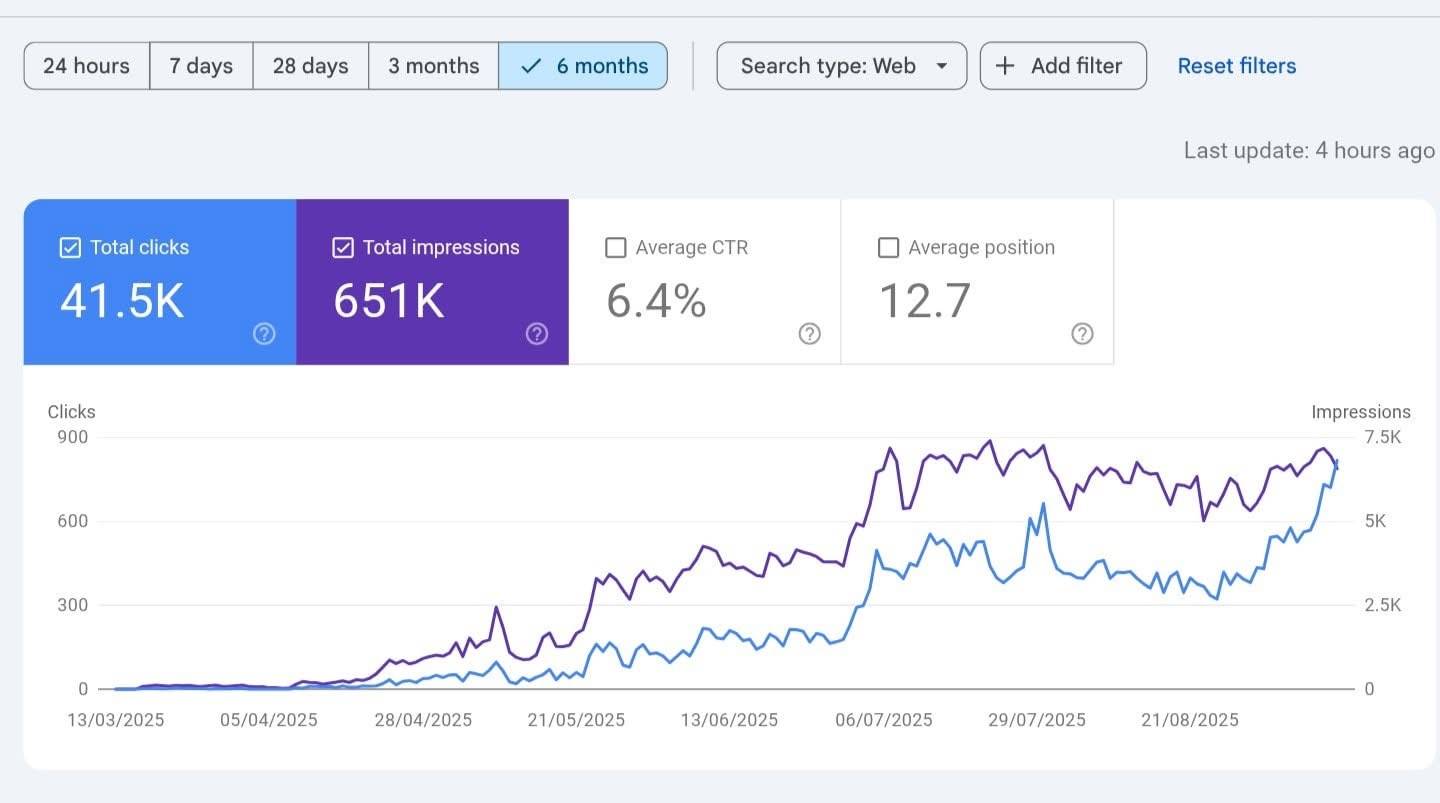
clicks in the 6-month UK case study
impressions in the 6-month UK case study
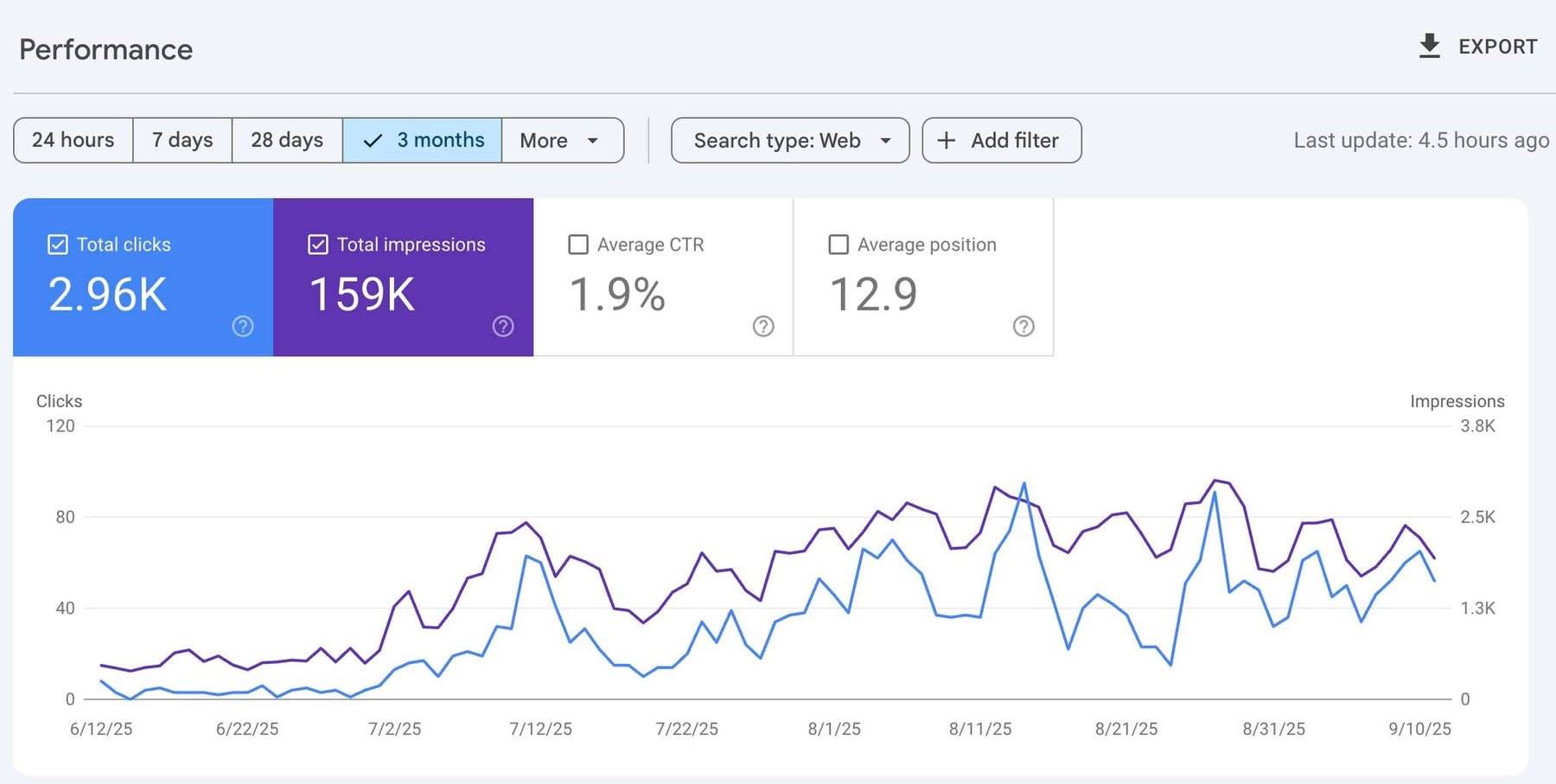
clicks in the 3-month US case study
impressions in the 3-month US case study
Direct answer
What these GEO case studies prove
They prove that clear entities, structured answers, topical clusters, internal links, verifiable claims and schema-supported content can materially improve search visibility. That does not automatically prove AI citations by itself, which is why NeuralAdX Ltd separates Google Search Console evidence from live AI retrieval evidence.
Important distinction
Search growth and AI citation authority are linked, but not identical
Traditional search growth shows that a site is becoming more discoverable, better structured and more useful. AI answer engine testing checks the next layer: whether AI systems actually retrieve, mention, cite or recommend the brand in real answers.
AI Citation Benchmark
Tracks citation frequency growth over time using third-party AI citation software.
AI Answer Visibility & Share of Voice Benchmark
Measures brand mentions, surfacing, comparative positioning and share of voice across AI answer outputs.
Proof GEO Works Video Validation
Live screen-recorded AI retrieval tests showing real answer engine behaviour across major AI platforms.
GEO framework alignment
Search signals vs AI answer engine signals
Modern Generative Engine Optimisation must measure both conventional search performance and AI answer engine visibility. Search Console shows clicks, impressions, CTR and ranking movement. AI retrieval testing shows whether a brand is being surfaced, cited, mentioned and trusted inside AI-generated answers.
| Performance dimension | Traditional search evidence | AI answer engine evidence |
|---|---|---|
| Traffic output | Clicks | Citations, mentions and recommendations |
| Visibility output | Impressions | Answer inclusion frequency |
| Position output | Average ranking position | First-mentioned or first-cited surfacing |
| Trust output | CTR and engagement patterns | Source trust probability and citation selection |
| Core strategy | Keyword, ranking and snippet optimisation | Entity clarity, citation readiness and answer retrieval optimisation |
Case study comparison table
Side-by-side GEO case study performance comparison
This table makes the two Google Search Console case studies easier for users, search engines and AI answer engines to compare. It uses real HTML table semantics, inline CSS only, and mobile-safe horizontal scrolling.
| Comparison point | Case Study 1: UK B2C-B2B | Case Study 2: US B2C | GEO interpretation |
|---|---|---|---|
| Measurement period | 13 March to 13 September 2025 | 12 June to 10 September 2025 | Both case studies use a defined date range instead of vague results claims. |
| Total clicks | 41.5K | 2.96K | Shows search demand capture after structured content and page improvements. |
| Total impressions | 651K | 159K | Impression growth is the clearest signal of expanded search visibility. |
| Average CTR | 6.4% | 1.9% | CTR varies by market, intent, SERP layout and ranking mix, so it should be read alongside impressions and average position. |
| Average position | 12.7 | 12.9 | Both campaigns reached a similar average position band while operating in different markets. |
| Implementation focus | Answer-first intros, topical clusters, FAQs, schema, internal anchors and E-E-A-T cues. | Entity clarity, proof-led content, freshness signals, reusable checklists and structured data. | Both campaigns used machine-readable, answer-ready and citation-ready content improvements. |
| Main evidence source | Google Search Console screenshot: Figure 1 | Google Search Console screenshot: Figure 2 | The screenshots support search performance evidence. AI citation evidence is measured separately in the NeuralAdX Ltd benchmark and live retrieval proof pages. |
Note: this comparison table does not claim identical future results. Results vary by website authority, market difficulty, crawlability, content quality, implementation depth and platform behaviour.
Case study 1
6-month Generative Engine Optimisation lift for a UK B2C and B2B website
A focused GEO and search optimisation rollout improved the site’s answer readiness, topical structure, internal linking, citation clarity and crawlable content depth over a six-month period.
What NeuralAdX Ltd implemented
- Answer-first introductions for priority pages.
- A topical cluster with hub, support, pricing, comparison and case study content.
- Verifiable facts, visible dates, statistics, quotations and citations.
- FAQs, numbered steps, checklists, definitions, tables and technical terms.
- Article, Q&A, HowTo, Organisation, glossary and table-of-contents schema where appropriate.
Why it worked
- Clearer page structure reduced ambiguity for users, crawlers and AI systems.
- Consistent terminology matched real search queries and improved snippet clarity.
- Internal anchors helped preserve contextual relationships between pages.
- Author, sourcing and update signals strengthened trust and reuse potential.
Timeline summary
- Weeks 1 to 2: audit, topic map, schema plan, quick technical fixes and initial content improvements.
- Weeks 3 to 6: hub page and supporting pages published, with structured content and schema improvements.
- Weeks 7 to 10: comparison, pricing and internal linking improvements added.
- Weeks 11 to 16: how-to pages, glossary content, citation strengthening and Search Console-led iteration.
Case study 2
3-month Generative Engine Optimisation gains for a US B2C website
This project focused on entity clarity, proof-led page content, direct answers, structured data and reusable content formats designed to improve visibility across search and answer-style discovery environments.
What NeuralAdX Ltd changed
- Entity definitions and consistent naming across priority pages.
- Proof-led copy where claims were tied to visible sources, dates and evidence.
- Direct answers for one primary question and supporting follow-up questions.
- Freshness notes and content update signals.
- Article, FAQPage, HowTo, Organization and Breadcrumb structured data where relevant.
Why it worked
- Cleaner entities helped reduce model and crawler confusion.
- Direct answers made pages easier to understand and reuse.
- Verifiable proof increased trust and citation readiness.
- Regular improvements helped visibility compound over the measured period.
GEO case study FAQ
Common questions about Generative Engine Optimisation case studies
How fast can GEO results appear?
Some sites can see impression growth within 4 to 8 weeks after a strong GEO cluster goes live, but CTR, rankings and AI retrieval improvements usually depend on website authority, crawlability, content quality, market difficulty and implementation depth.
Do Google Search Console results prove AI citations?
No. They prove search visibility, clicks, impressions, CTR and average position. AI citations must be validated separately through AI citation tracking, live retrieval testing and answer visibility/share-of-voice analysis.
What makes a page more likely to be reused by AI systems?
Clear answers, named entities, structured sections, accurate schema markup, verifiable facts, citations, statistics, quotations, author signals, freshness and strong internal linking all improve retrieval clarity.
Can NeuralAdX Ltd measure my current AI visibility?
Yes. The starting point is a Free AI Visibility Test that checks whether your business is mentioned, cited, ignored, weakly surfaced or beaten by competitors for selected commercial prompts.
AI Visibility Assessment
NeuralAdX Ltd
Find out if AI is mentioning, citing or ignoring your business
Get a clean starting point before spending money on AI visibility work. NeuralAdX Ltd checks your website against an 11-factor GEO framework and tests five live commercial AI prompts to see whether AI engines mention, cite, recommend or ignore your business.
11-factor GEO review
No obligation
GEO framework factors checked
commercial AI prompts tested live
Send your request in under two minutes
The email button opens a pre-filled message. Add your website URL, best contact number, five priority AI prompts and any helpful context.
Prefer to talk? Call NeuralAdX Ltd
No obligation. Suitable for businesses considering professional Generative Engine Optimisation service support. You can also review the AI Citation Benchmark, AI Answer Visibility & Share of Voice Benchmark and live AI retrieval proof.